Experts in Every Room and One Dunce in a Corner January 25, 2012
Posted by Chris Mark in Piracy & Maritime Security.Tags: Anti Piracy, Chris Mark, expertise defined, Maritime Security, Piracy & Maritime Security
add a comment
 The influx of new companies within the maritime security industry has increased competition. In response, some companies have given in to the temptation to embellish the experience or expertise of individuals or companies in an attempt to differentiate themselves from the crowd. It is an unfortunate reality of business. In an effort to help shipping companies evaluate the vendors selling “today’s solution to tomorrow’s problem”, I have put together a quick paper on ‘expertise’. Below is an excerpt of the paper you can read here:
“Introduction
The current market for maritime security and anti-piracy has resulted in the creation of a cottage industry of self-proclaimed experts speaking on the subject of anti-piracy and selling maritime security and anti-piracy services. A review of some of these “experts’” comments and the services being promoted suggests that the expertise espoused is a rarer trait than one would be led to believe. This paper is intended to provide information to allow prospective clients to separate the experts from those that claim expertise to capitalize on the current market for maritime security services. For brevity’s sake, this paper will use the generic term Maritime Security to refer to both anti-piracy and maritime security services.
Author’s Note
While knowledgeable on the subject, I do not consider myself an expert in maritime security. I am a payment security expert and probably have expertise in a number of other areas but have not achieved a level of experience or education that would allow me to call myself an expert by any means.
Expertise Defined
To understand how to identify those with actual expertise from those who simply call themselves experts it is important to have a definition of the term ‘expert’. Webster’s dictionary provides the following definition for the noun ‘expert’:
Noun:
“…one with the special skill or knowledge representing mastery of a particular subject”
Within the context of maritime security, expert, as a noun would be applied as follows:
“Joe is an Expert in maritime security.”
Making this statement implies that Joe possesses a special skill or knowledge representing mastery of a particular subject. In this case, the subject is maritime security. The focus of this statement should be the word “mastery”. This suggests that Joe possesses an intimate knowledge rather than a passing familiarity with the topic.
Webster’s dictionary provides the following definition for the adjective ‘expert’:
Adjective:
“…having, involving, or displaying special skill or knowledge derived from training or experience”
Within the context of maritime security the term expert, as an adjective, would be applied as follows:
“Joe’s expertise in maritime security is derived from his formal training and experience.”
Making this statement indicates that Joe has a special skill or knowledge derived from training or experience. Within this context, the key is “training or experience”. Without relevant or appropriate training or experience (or both, in most cases), it is difficult to see how a person could be defined as an ‘expert’.
Consider the example of a Doctor that has passed her medical boards. While the doctor may be a general practitioner and not considered an expert in neurosurgery, she would arguably be considered an expert in medicine relative to those who have not attended similar training or passed the medical boards. The doctor’s expertise is qualified by training (medical school) and experience (residency), as well as quantified by passing medical school boards. If a person were to sit at home and read anatomy and medical books they could certainly attain some level of medical knowledge but it is extremely difficult to see how a person such as the one described would be considered an ‘expert’ in medicine.
While it is not suggested that becoming an expert within the maritime security industry is similar to that of becoming a neurosurgeon, the complexity of the industry and the maritime security challenges should not be underestimated since valuable resources and human lives are at stake. The maritime security industry is complex and the ever-changing regulatory landscape coupled with the changes the pirates’ tactics increase the complexity. In his popular book, Outliers, Malcolm McGladry references Neurologist Daniel Levetin who says:
“The emerging pictures from such studies is that ten thousand hours of practice is required to achieve the level of mastery associated with being a world-class expert-in anything.””
You can read the full paper here.
Looking for Expertise? Mark Consulting Group is now open for Business January 25, 2012
Posted by Chris Mark in Uncategorized.Tags: Chris Mark, Heather Mark, mark consulting group, whitepapers
add a comment
 As a professional consultant, entrepreneur, and executive, I have decided to once again hang a shingle and open my newest venture Mark Consulting Group. Unlike other companies I have founded, this will remain a boutique consulting operation focused on helping companies with strategy, marketing, bizdev, operations, branding, and the like. We have significant social media expertise and the other principals bring a variety of unique skills to the table. Our objective is simple. To help you increase revenue through increased business or retain more profit through increased operational efficiencies. Either way, your business is more successful. Please take a moment to review my website and if you have a particular need, please don’t hesitate to contact me directly. We have work samples on the site. http://www.markconsultinggroup.com
US Navy SEALs Rescue Hostages in Somalia January 25, 2012
Posted by Chris Mark in Industry News, Piracy & Maritime Security.Tags: Chris Mark, DevGru, Jessica Buchanan, SEAL, Somali Hostage
add a comment
Making the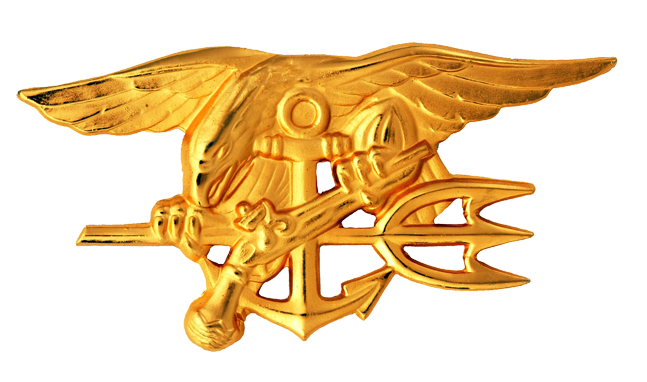 news once again are the SEALs which, according to reports, conducted a hostage rescue in Somalia yesterday. The SEALs assaulted the compound where they took fire. According to reports, 9 gunmen were killed. The hostages, American Jessica Buchanan, and Poul Thisted of Denmark, were captured last October while working for a Danish refugee council’s de-mining unit. According to President Obama: “The United States will not tolerate the abduction of our people, and will spare no effort to secure the safety of our citizens and to bring their captors to justice,” Obama said in a statement. “This is yet another message to the world that the United States of America will stand strongly against any threats to our people.”
From Fragmentation to Consolidation- The Inevitable Shake-out of Maritime Security January 22, 2012
Posted by Chris Mark in Industry News, Piracy & Maritime Security.Tags: Chris Mark, competitive strategy, five forces model, mark consulting group, porters five forces
1 comment so far
 Over the past year the maritime security industry (anti-piracy) has changed significantly. While pirate attacks continued to increase through 2011, successful (in the view of the pirates) hijackings began to taper-off then decline toward the end of 2011. By December 2011 attacks were down 65% and actual hijackings were down 85% from November, 2010 (read the post here). The decline in successful hijackings can be attributed to a number of factors including adoption of BMP4, use of armed guards, convoys and so on. Regardless of the reasons, from a market perspective the impact is the same.
Within the same time period the entrants into the anti-piracy arena increased an estimated 4 fold. From the early days of RedFour, PVI, Trident and Nexus came a new rash of entrants as every former Marine, Commando, SEAL and other tactically minded person was attracted to the seemingly easy revenue present in the industry. A look at the ICOC membership as of December 1st, 2011 shows 266 signatories. Using the ICOC as a barometer one can see the explosive growth. On November 9th, 2010 the ICOC had 13 signatories. 13 more signed on February 1st, 2011. 24 more signed in April, 2011, and so on. Of the 266 signatories over 150 appear to provide Maritime Security services. Considering that there are numerous companies that have not yet signed, it is fair to assume that the number of Maritime Security Companies now stands at about 200.
While this is not a class on Porter’s Competitive Forces, there is some value to be garnered from Porter’s studies. Porter made it clear that choosing a firm’s relative competitive position within a selected industry is a decision of secondary importance. The 5 forces provide a framework which allows for the identification of the anticipated profitability within an industry or segment and help companies stake a position within the industry. A very quick, high-level analysis of the market shows that we are headed for the inevitable shakeout and consolidation of the market. Currently, the large number of competitors jockeying for position means that the maritime security industry appears fragmented but this is only temporary and does not tell the full story. I say ‘appears’ because concentration ratios and other factors tell a different story. For those who study competitive theory a fragmented market is good as it generally indicates a profitable industry.
Porter’s framework consists of five fundamental competitive forces. Commentary has been added to each to show the movement toward consolidation.
1. Entry of competitors– assessing the ability of new entrants to start operations and the structural barriers they must overcome; (Comment) The less the barriers to entry, the greater number of competitors will enter the market driving prices down as competition increases. It should be noted that the barrier to entry to ‘creating’ a maritime security company is low however the barrier to entry in successfully operating a company is high. There is quite a bit of noise caused by entrants that have no capability to actually deliver on maritime services they are selling.
2. Threat of substitutes–assessing the ability of new products with superior characteristics to replace existing product(s) or service(s); (Comment) While armed guards seem to be the panacea of security, BMP4 and other tactics are proving effective, as well leading some to question the need for armed guards.
3. Bargaining power of buyers– assessing the relative strength and number of buyers;* (Comment) the disparity in the size of the buyers (shipping companies) and the suppliers (armed security companies) coupled with the large number of entrants creates a situation in which buyers have strong bargaining power. Prices continue to drop.
4. Bargaining power of suppliers– assessing the relative strength and number of sellers;* (Comment) with the exception of the few large player, suppliers generally have little, if any bargaining power.
5. Rivalry among the existing players– assessing the relative competitive strength of rival firms.* (Comment) There is increasing rivaly among the players as new entrants enter the market. Several large players are beginning to predominate the industry showing a trend toward consolidation.
* Concentration ratio (CR): the percent of market share held by the four largest firms within an industry is frequently used as a leading measure. A high CR means that few firms hold a large market share, are less competitive, and create a less competitive, more monopolistic landscape. Less competition leads to higher profit margins. A low concentration ratio indicates that an industry is characterized by many rivals, none of which has a significant market share. These fragmented markets are said to be competitive. (Comment) Going back to my previous statement. There are a huge number of new entrants but the vast majority of these companies are simply ‘hoping and praying’ that they can land a client. Some companies have managed to sign clients only to realize that they cannot operationally support the clients.
It should be noted that the decrease in hijackings is anticipated to result in a reduction in the demand for armed security. (at least temporary reduction until an event such as an increase in hijackings causes an new demand). Additionally, the increasing number of entrants is going to continue to drive profit margins down until there is a shakeout in the market. It is a fair assumption at this point to say that within the next 12 months, an estimated 50% of the maritime security companies within the industry will be nothing more than a vanity company (no business just a name) or will be out of business while the major players with the operating capital, economies of scale, and operational expertise will survive the shakeout and continue to grow as the industry continues to consolidate. The end result with be a more mature, disciplined industry with fewer entrants and more consistent profit margins. Unfortunately for the vast majority of industry entrants, their foray into the market will likely be short lived as they are either forced out, or acquired by the larger competitors as the market continues to consolidate.
Costa Concordia Runs Aground; 3 Dead Scores Missing January 14, 2012
Posted by Chris Mark in Industry News.Tags: Chris Mark, costa concordia, mark consulting group, markconsultinggroup.com, ship aground
add a comment
 This is a tragic story but one that is worth reading. Read MSNBC here. The Costa Concordia ran aground off Italy today and at least 3 are confirmed dead and scores missing. You have to see the pictures. Unbelievable to see a ship of her size run aground. Hopefully, the casualties will be minimized but from the look of the ship it seem unlikely that they won’t be significant.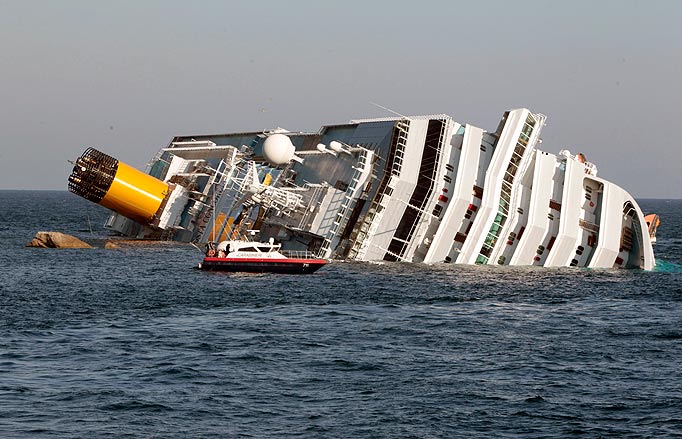

 Global Security, Privacy, & Risk Management