UAE Tanker Hijacked in Indian Ocean July 18, 2011
Posted by Chris Mark in Piracy & Maritime Security.Tags: Chris Mark, gulf of aden, InfoSec, Maritime Security, Piracy & Maritime Security, risk management, Somalia
add a comment
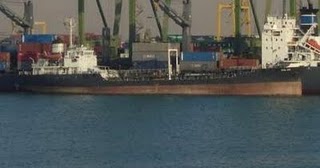 Today 9 Somalian pirates hijacked the MV Jubba XX tanker in the Northern Indian Ocean. The fully laden tanker was enroute from UEA to Berbera, Somalia when attacked. The pirates have captured the ship as well as her 16 crewmen. As the IMB stated: “In the last six months, Somali pirates attacked more vessels than ever before and they’re taking higher risks,” said IMB Director Pottengal Mukundan. “This June, for the first time, pirates fired on ships in rough seas in the Indian Ocean during the monsoon season. In the past, they would have stayed away in such difficult conditions. Masters should remain vigilant,’’
Pirates are becoming more violent and taking greater risks in their pursuit of targets.
Improvise, Adapt, Overcome! July 15, 2011
Posted by Chris Mark in Uncategorized.Tags: Armed escort, Chris Mark, gulf of aden, InfoSec, Maritime Security, Piracy & Maritime Security
2 comments
The pirates are clearly applying all three tactics. While the problem won’t be solved on the high seas alone, right now this is where the rubber is meeting the road. That said, recent intelligence indicates that pirates are purchasing information from operatives in London and the Persian Gulf, which provides precise information where the most lucrative and vulnerable ships will be.
In asymmetric warfare, intelligence becomes a key aspect in defeating practices being used against your tactics. British police recently detected efforts to obtain information for pirates, and believe these efforts are becoming more intense.
Having transited the Gulf of Aden and Indian Ocean personally on clients’ vessels no less than six times, I can tell you first hand that this modus operandi has been occurring for well over a year, yet the industry is only now acknowledging this fact.
Pirates are equipping mother ships with GPS, radar and satellite phones, which enables them to direct skiffs to actual latitude/longitude positions. A recently pirated vessel that was released reported that when pirates boarded the vessel, they asked the crew “where they had been,” and that they were waiting for them for two hours.
Pirates are actively seeking information on shipping companies’ plans in general. Pirates are beginning to equip boarding parties with explosives and welding equipment to give them a chance of breaching citadels; this will keep warships away because now they have hostages.
2011 Pirate Attacks at Record Pace July 14, 2011
Posted by Chris Mark in Piracy & Maritime Security, Risk & Risk Management.Tags: Chris Mark, gulf of aden, InfoSec, Maritime Security, Piracy & Maritime Security
add a comment
If the first six months of 2011 are any indication, the year is going to break records for the number of pirate attacks. In the first six months of the year attacks are up 36% from 2010. According to IMB, from January through June of 2011 there were 266 attacks compared with 196 a year earlier. While the number of attacks increased, the number of ships hijacked fell from 27 to 21 due to increased security measures. Pirates only hijacked 1 in 8 vessels this year compared with 1 in 4 last year. Unfortunately, there is a downside to the increased security.
According to IMB the pirates are taking more risks and becoming more violent in their attacks. This year pirates fired upon ships during monsoon season for the first time.
Monsoon weather in the Indian Ocean region that began in early June displaced pirates to the Gulf of Aden and the southern Red Sea, the IMB said. It called the 18 attacks reported in the Red Sea area since May 20 “a cause for concern.” Three attacks in the Indian Ocean in adverse weather showed threats remained during monsoons for the first time, the IMB said, citing winds of 34 miles an hour and swells of 4.5 meters (15 feet).
“It may be that these recent Indian Ocean incidents are a sign of desperation on behalf of pirates, or that there are many more pirate action groups operating now than there were in 2010, particularly outside the Gulf of Aden,” the IMB said.
In short, while increased security measures may be hampering the success of pirates, this trend is not expected to last. The potential ‘return on investment’ of a hijacking is simply too great for pirates to ignore. The result with be an inevitable cycle of increased security followed by increased risk taking by the pirates. This pattern can be seen developing now. It is important for shipping companies to evaluate arming their ships with professional security personnel to prevent hijackings.
False Sense of Security! July 13, 2011
Posted by Chris Mark in Uncategorized.Tags: gulf of aden, InfoSec, Maritime Security, Piracy & Maritime Security
add a comment
I recently read a request that came across my desk from a shipping company that demanded we only provide a two man security team for a vessel transiting the Gulf of Aden. The ship was over 180 meters in length, had a crew of over 20 and was a “low and slow.” After pondering over this request for a minute I thought of the message this dangerous type of situation sends. Frankly, the industry is exposing itself to far greater risk by cutting down on the requisite number of men that can effectively defend a “sustained attack.” By most accounts anyone reading the live piracy report posted on the IMB’s website has seen attacks lasting as long as an hour, with pirates chasing vessels in multiple skiffs. A four man team provides barely enough coverage, and I’d caution companies who are engaged by security specialists that purport two or three men, with a couple of ineffective weapons such as a shotgun and an old bolt action rifle will be enough of a deterrent to thwart an attack. We have actually seen pictures of three man teams with one vintage rifle from the 1800’s and 11 bullets total tasked to defend a ship.
Think of it this way, if a potential client approached you as a ship owner with a request for just the captain and chief engineer to operate a vessel you owned, would you expose yourself to that type of risk for the sake of making money?
West African Pirate Attacks Mimic Those In GoA July 9, 2011
Posted by Chris Mark in Piracy & Maritime Security, Risk & Risk Management.Tags: Chris Mark, gulf of aden, InfoSec, Maritime Security, Piracy & Maritime Security, Somalia
add a comment
According to Bergen Risk Solutions, attacks off of the coast of Nigeria are beginning to resemble those off of the coast of Somalia in what some say is a disturbing trend. In June, 2011 there were five attacks alone. The pirates are opting against the traditional robbery and are instead adopting the Somali tactics of hijacking the ships and holding for ransom. The attacks demonstrate an increasing use of the Automated Ship Identification system (AIS) to target vessels as well as violence in their attacks. 1 person was killed in the attacks in June. Bergen Risk stated:
“Anecdotal evidence gathered in Nigeria confirms that the group has watched the modus operandi used by Somali pirates and has emulated their use of motherships.”
It added: “We find that most attacks are carried out in the hours of darkness, that pirates have no problems in carrying strikes up to 50 to 60 nautical miles from shore (but the vast majority of incidents are much closer to land) and that they have a very low threshold for using violence. Many crew members have been severely beaten and even shot during attacks.”

 Global Security, Privacy, & Risk Management