Snipers, Gun Control and Causality…oh my! June 11, 2014
Posted by Chris Mark in Uncategorized.Tags: 2nd amendment, arms, causality, cause, Chris Mark, correlation, everytown, fallacies, fallacy, firearms, gun control, virgil
4 comments
 With yet another shooting in the news, the debate is again raging about gun control. I personally believe these are healthy debates but I am often frustrated by the seemingly illogical positions taken on both sides of the debate. Last year I wrote a post titled “A Perspective on Killing from a Marine and His Rifle” in which I provide personal as well as third party information on what is required to create a ‘killer’. Adding to this I am including information that should help people better understand causality and point to the ‘actual’ cause of an event in which a firearm is used. This is taken from the research brief titled: “Failed State of Security II; Victim Blaming in CyberCrime”
Understanding Causality
The simple term “cause” can be deceptively complex to understand and apply. The application becomes much more difficult when applied to social issues and events where ambiguity, subjectivity, and moral and ethical aspects must be considered. While the concept of cause and causality has been studied and debated by philosophers for millennia a commonly accepted definition is still not found. It was Virgil who, in Georgics 2 in 490 said: “Felix qui potuit rerum cognoscere causas” or “blessed accomplishment theirs, who can track the causes of things”.[i] The difficulty of defining the concept of “cause” is familiar to those with an interest in philosophy or science. Without becoming a primer on the intricacies of the debate, suffice it to say that cause, like security, is necessarily contextual in nature. Within the context of Victimology, it is important to understand the distinction between identifying what a person emotionally or philosophically believes is a ‘cause’ of an event that impacts a victim and the philosophical and legal concepts of ‘cause’ as they applies to a crime.
The Philosophical View of Causality
As discussed in the introduction to this paper, people often ascribe blame based upon their internal logical calculus or emotional belief as to what a ‘cause’ of an event is. Within the context of firearm violence, this is particularly true. Firearm control advocates state that “firearms cause” violence etc. For this reason, it is important to understand the philosophical underpinnings of reasoning and how they apply to determining ‘cause’. As important is the understanding of errors in logics. Within logic, errors in either reasoning or structure are known as fallacies. With an understanding of the common fallacies that pertain to identification of cause, it is easier to understand and identify the true, or actual cause of an event. (more…)
(DESERTER/TRAITOR) Bowe Bergdahl “traded” by Taliban (UPDATED x2) May 31, 2014
Posted by Chris Mark in Uncategorized.Tags: Afganistan, Andrews, Army, bergdahl, bob, Bowe Bergdahl, Bowen, Curtiss, deserter, Martinek, Murphrey, POW, SGT, Taliban, traitor, Walker
add a comment
 UPDATED..I have read numerous reports and claims and talked to numerous individuals. Nothing pains me more than to write that one of our own is a deserter and traitor. Out of respect for those who served with Bergdahl and, more importantly, those who DIED searching for Bergdahl, I am updating this post. I truly believe that Bergdahl left his post intentionally thereby deserting his post and intended to join the the enemy. Unfortunately, 6 brave soldiers died searching for this traitor. This post is now a tribute to those brave soldiers…..Rest Easy Brave Soldiers…rest easy…
- Staff Sergeant Clayton Bowen,
- Private 1st Class Morris Walker
- Staff Sergeant Kurt Curtiss
- 2nd Lieutenant Darryn Andrews
- Staff Sergeant Michael Murphrey,
- Private 1st Class Matthew Martinek
The more information that comes out about Bergdahl, the more it appears (to me, anyhow) that he deserted and 5 (or more) soldiers were killed in the search for him. 5 Taliban commanders were traded for his release. I am going to await further information before removing this post. Until them, I am grateful an American soldier is home. Today marks a great day. A Prisoner of War who was captured by the Taliban and held for 5 years has been released in exchange for 5 Taliban prisoners held at Gitmo. You can read the story here. Glad to have Sgt. Bergdahl coming back home!…
”Active Responses” to CyberAttacks are Losing Propositions May 22, 2014
Posted by Chris Mark in cybersecurity, Data Breach.Tags: active, active response, Chris Mark, cybercrime, cybersecurity, data breach, data security, deterrence, fight, InfoSec & Privacy, PCI DSS, response, security
1 comment so far
“Everyone has a plan until the’ve been hit” – Joe Lewis
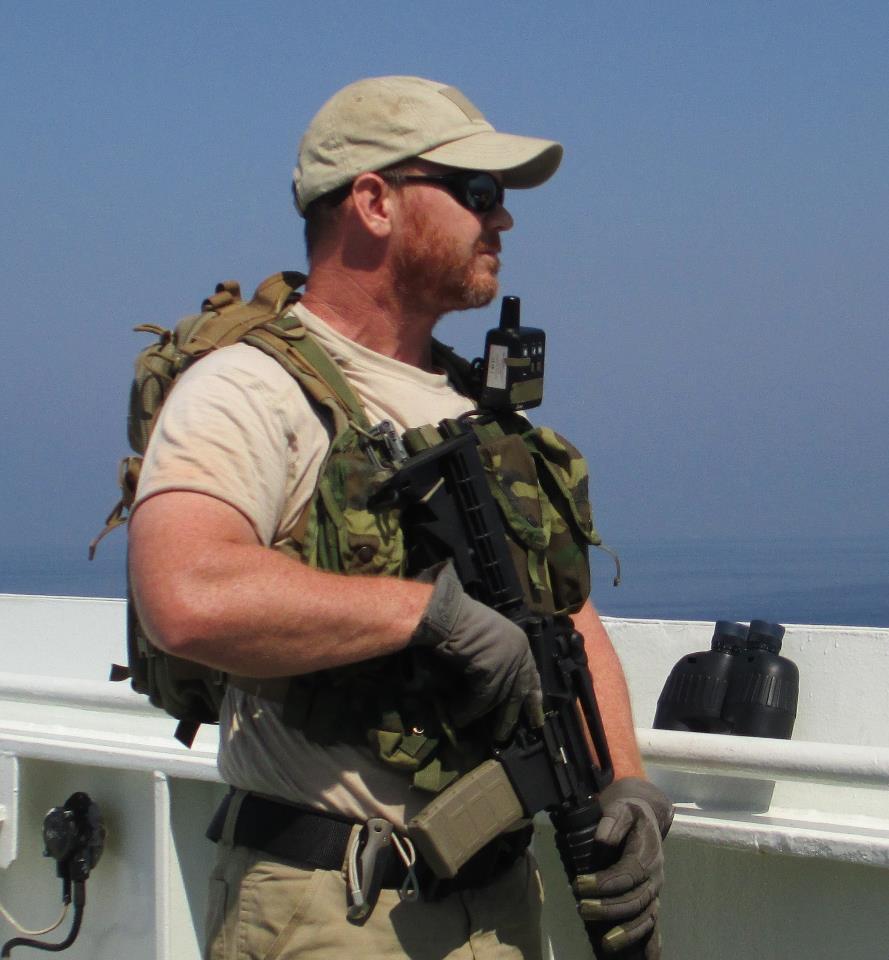 Having spent numerous years providing armed and unarmed physical security in combat zones, hospital emergency rooms, psychiatric wards, and anti-piracy operations off the coast of Somalia has given me a deep respect for force continuum and the dangers of unnecessarily provoking an escalation by a volatile and dangerous adversary.
As cyberattacks continue to plague American companies as well as the payment card industry, there is a growing voice within the cybersecurity industry to allow and empower companies to take offensive action against cyber attackers. This is frequently referred to as ‘hacking back’ or ‘offensive hacking’. Several prominent security experts as well as some companies who have fallen victim to cyber-attacks have begun advocating that ‘a good offense is the best defense’. On May 28th, 2013 there was an online discussion in which an author of the upcoming book: The Active Response Continuum: Ethical and Legal Issues of Aggressive Computer Network Defense[1] posted the following excerpt:
“There are many challenges facing those who are victimized by computer crimes, who are frustrated with what they perceive to be a lack of effective law enforcement action to protect them, and who want to unilaterally take some aggressive action to directly counter the threats to their information and information systems.”[2] (emphasis added) (more…)
Memorial Day History & Remembrance May 22, 2014
Posted by Chris Mark in Uncategorized.add a comment
Reposting to remind people of the history of Memorial Day.

 As I, and certainly many other readers, have lost friends, comrades, loved ones, and family members in the service of our great nation, I think it is appropriate to remember that this weekend marks Memorial Day weekend and Monday is Memorial Day. You can read the history of Memorial Day on this website. I have taken the background of Memorial Day and put in quotes below:
View original post 993 more words
“Failed State of Security” Part II; Cybercrime Victim Blaming May 18, 2014
Posted by Chris Mark in Uncategorized.Tags: causality, cause, Chris Mark, compromise, crime, cybercrime, data breach, deterrence, hack, PCI DSS, security, Target, theft, victim blaming, victimization
add a comment
 I am proud to release another research brief that is Part II of my “Failed State of Security” series in which I discuss and analyze victim blaming in the context of data security. In 2012 I published a research brief titled “A Failed State of Security: A Rational Analysis of Deterrence Theory and The Effect on CyberCrime.” in which I discussed the failing of law enforcement, and cybersecurity to deter cyber events and discussed the theory of deterrence and the need for deterrence within cybersecurity. You can download the article on IDGA’s website or on my own website here. This paper is part II of the “Failed State of Security” series. Started after the Target data breach, this topic is one that has always been close to me. In April 2009 I wrote an article titled “Lessons from the Heartland Breach” which was published as the cover story by TransactionWorld magazine.
Victim blaming is common in sexual assault, as well as other types of crimes. A quick Internet search will demonstrate scores of instances in which the victim of a violent is blamed for being victimized. When we include a large, corporate entity it becomes easier to point the accusatory finger at the organization. Whether due to Schadenfreude or some other reason, people want to blame companies that are victimized by hackers. Did the company “cause” the breach? Were they somehow complicit in the attack? What do we mean when we say “cause”? What is a causal fallacy? These, and many more topics, are discussed in Part II of the “Failed State of Security” series. I invite you to download “Failed State of Security Part II”; Victim Blaming in Cybercrime. As always, I welcome any comments or debate on the topic…

 Global Security, Privacy, & Risk Management