Tanker with Millions of Barrels of Oil Ablaze In GoA July 6, 2011
Posted by Chris Mark in Piracy & Maritime Security, weapons and tactics.Tags: armed security, Chris Mark, InfoSec, maritime piracy, Maritime Security, Piracy & Maritime Security
add a comment
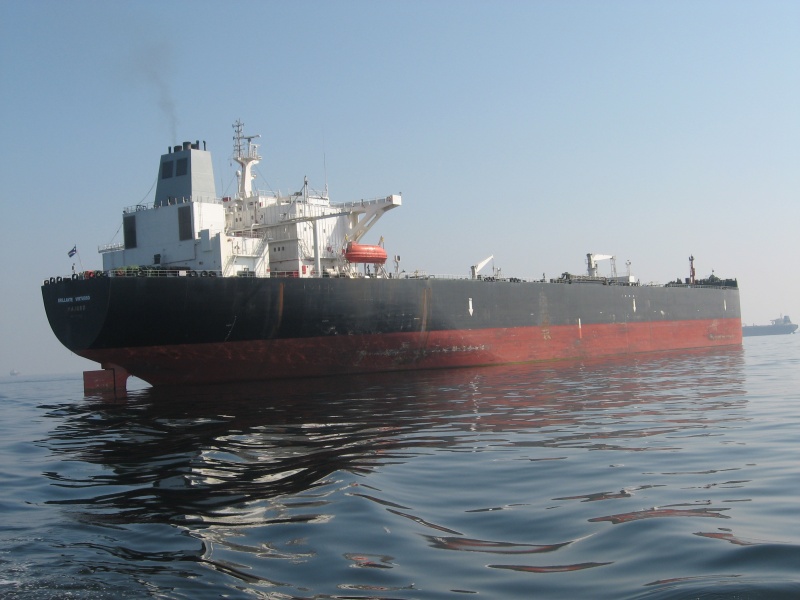 Bloomberg reports that an oil tanker was attacked approximately 20 miles from Aden and wet ablaze. The 274m Brillante Virtuoso was attacked by pirates in the Gulf of Aden and reported ablaze at 0037z. The 26 crew members are reported to be OK and the ship is currently being pulled by two tugs. The ship was attacked when approaching port to take on unarmed guards, it is reported.
Pirate Ransom Payments going to Somali Militant Groups July 6, 2011
Posted by Chris Mark in Laws and Leglslation, Piracy & Maritime Security, Risk & Risk Management, weapons and tactics.Tags: Chris Mark, InfoSec, maritime piracy, Maritime Security, Piracy & Maritime Security, risk management
add a comment
According to John Steed, the principal military adviser to the U.N. special envoy to Somalia and head of the envoy’s counter-piracy unit, said links between armed pirate gangs and Somalia’s al Qaeda-affiliated rebels were gradually firming.
“The payment of ransoms just like any other funding activity, illegal or otherwise, is technically in breach of the Somalia sanctions regime if it makes the security situation in Somalia worse,” said Steed.
“Especially if it is ending up in the hands of terrorists or militia leaders — and we believe it is, some directly, some more indirectly,” said Steed, a retired military officer. For those who believe it is still all speculation, an Al Shabab representative confirmed the arrangement:
“If there was no relationship between us, there is no way the pirates would be able to operate, or carry their weapons within zones we control,” said an al Shabaab militant based in the pirate haven of Haradhere, north of Mogadishu.
Unfortunately, this means shipping companies may be in violation of international sanctions if they pay ransoms to the pirate groups. Under the terms of the arms embargo on Somalia, financial support to armed groups in the Horn of Africa country is banned. Both the United States and Britain regard al Shabaab as a terrorist organisation.
The best course of action for shipping companies is to ensure that their ships are adequately protected from takeover.
Royal Navy Prevents Pirate Attack July 5, 2011
Posted by Chris Mark in Piracy & Maritime Security.Tags: Chris Mark, InfoSec, maritime piracy, Piracy & Maritime Security
add a comment
 On July 4th, 2011 ten pirates in two skiffs made an attempt to board the MV Sagar Ratan approximately 150 miles from Muscat, Oman. The ship signaled SOS and took evasive maneuvers while the RFS Fort Victoria headed toward the ship. According to reports, the pirates fired 5 RPGs at the Ratan and attempted to board using boarding ladders. At the same time the Fort Victoria was heading toward the ship, 2 F/A-18 fighters were launched from the USS Ronald Reagan. In addition to thwarting the attack, the Fort Victoria also identified the pirate mother-ship the Taiwanese fishing vessel Shiuh Fu No. 1 which had been hijacked Christmas day off the coast of Madagascar (pictured). As the monsoon season is due to end shortly it is clear that the pirate attacks will again pick up steam. For this reason it is important for ship owners and other stakeholders to carefully consider whether to arm their ships with contracted armed guards.
Security Theater- Airplanes, DNA, and Anti-Piracy June 29, 2011
Posted by Chris Mark in Piracy & Maritime Security, Risk & Risk Management.Tags: Chris Mark, InfoSec, Maritime Security, security theater
add a comment
Bruce Schneier, in his book Beyond Fear, coined the phrase security theater. Security theater describes describes security countermeasures intended to provide the feeling of improved security while doing little or nothing to actually improve security. One of the clearest examples is that of US airport security. The guards checking people (randomly, I might add) is intended to make people feel as if they are more secure while really doing little to address the the risks to which airliners are exposed. Today I read an article in which the Contact Group on Piracy off the Coast of Somalia or the clumsily named CGPC had announced it is building a DNA database of Somali pirates. This database is due to be completed by 2012 and is intended to help cut off funding for pirates. According to the president of the organization proposed database will be a “base for other international actions against piracy” in waters off Somalia. While it is nice that something is being done, the question must be asked as to whether this is the right approach.
Another example of Security Theater is the joint patrols in the Gulf of Aden. The Gulf of Aden is approximately 205,000 square miles and the Arabian Sea is approximately 1.5 million square miles. Task Force 151 is a multinational task force which consists of between 14-15 ships (usually). It does not take a brilliant mathematician to see that 15 ships cannot patrol 205,000 square mile effectively. Spread equally, each ship would be responsible for about 13,666 square miles. When the Arabian Sea or Indian Ocean are included, the Task Force is anemic to say the least. In spite of this, the task force maintains that while it is not exactly winning the battle, it is not losing either:
“We are not fighting a losing battle. There has not been a successful piracy attack on merchant vessels since the end of April,” Commodore Tim Fraser, a regional maritime commander, told journalists aboard the amphibious assault ship Albion.
“There has been no successful piracy event in the Gulf of Aden since September last year. Although I would not wish to give an indication that this is sorted out, because it is not,” he told a news conference.
While these statistics, if true, are to be lauded the reality remains that the first quarter of 2011 has seen the most pirate attacks on record and has shown the pirates to be increasing in violence and sophistication. The fact remains that approximately 600 crew members remain as hostages of pirates as due scores of ships.
Growing up in Texas I remember racing my motorcycle through desolate West Texas and reading signs that warned “traffic monitored by aircraft”. As a teenager, I slowed down until one day I had an epiphany. Aircraft are expensive to fly and maintain. To use aircraft to catch the odd speeder simply did not make economic sense. From that day forward I raced like a bat out of hell on my motorcycle. In spite of frequently exceeding 120 mph, I was never once caught by one of the airplanes.
While many of the proposed controls are intended to keep traffic flowing by increasing the confidence of air travelers and ship owners (managers, masters) the reality is that many of the current practices are less effective at actually preventing piracy than they are at making people believe they are preventing piracy. A critical look at the numbers tells a more accurate story. Do not be taken in by security theatrics. The only way to ensure safe transit in pirate infested waters is to take personal accountability for the ship and her crew.
IMO Issues Guidance to Stakeholders on Use of Armed Guards June 28, 2011
Posted by Chris Mark in Laws and Leglslation, Piracy & Maritime Security, Risk & Risk Management.Tags: Chris Mark, IMO, InfoSec, Maritime Security, Piracy & Maritime Security
add a comment
In the circular MSC.1/Circ.1405 dated May 23, 2011 the International Maritime Organization issued guidance to shipowners, operators, and masters on the use of privately contracted armed security personnel aboard ships. As stated in the document, the purpose is to:
“…assist shipowners, ship operators and ship masters considering the use of PCASP on board ships to provide additional protection against piracy.”
The document includes a number of criteria for identifying, and vetting contracted armed security personnel. I feel that one of the most important is that which states that owners, operators, and/or masters should verify:
“availability of documentary evidence that firearms are procured, transported, embarked and disembarked legally;”
There is evidence that a few companies have armed ships using weapons procured through less than ideal circumstances (for the owners, operators, and masters) and may expose the shipping stakeholders to risk.

 Global Security, Privacy, & Risk Management