“Boo!” – October 2012 issue of TransactionWorld October 30, 2012
Posted by Chris Mark in Uncategorized.Tags: Chris Mark, Dr. Heather Mark, economics, PCI DSS, risk management, security, transactionworld
add a comment
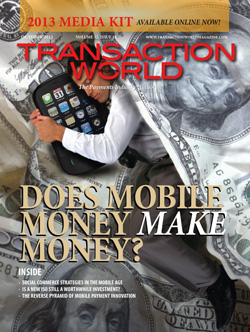 I (Chris) am finally back in the US after traveling for the past two months. If you haven’t had a chance yet, please check out October’s issue of TransactionWorld and read articles by Chris Mark (Security Economics) and Heather Mark (Portable Security). If you don’t subscribe to TW, you should check it out. Everything you could want to know about payments. (well..not everything but quite a bit).
Beating an Old Drum October 27, 2012
Posted by Heather Mark in cybersecurity, Data Breach, Industry News, InfoSec & Privacy.Tags: cybersecurity, data security, Dr. Heather Mark, Heather Mark, InfoSec, mark consulting group, privacy, security
add a comment
It’s the end of what has already been a tough year for data security. And the news just got worse. South Carolina has announced that its Department of Revenue suffered a major breach. The breach is so massive, in fact that more than 75% of the state’s residents have been affected. The compromised data consisted of the (unencrypted) social security numbers of more than 3.6 million residents. Also included in the breach were about 390,000 payment cards. Most of those were encrypted, though.
This is disturbing on a number of levels. I find it curious, for example, that while encryption was deployed, it was only deployed on payment cards (and not even on all of those). Consumers have built in protections on payment cards. As long as those cards are branded by one of the major card brands, consumers are protected against liability for fraudulent transactions. The far more sensitive data, the social security numbers, were not encrypted, though. This defies logic. Consumers have little to no protection against misuse of SSNs. Not only can very real financial damage be done, consumers have to spend enormous resources (time, money, emotions) in untangling the identity theft knot that comes with stolen SSNs.
Secondly, in the wake of the breach, Governor Nikki Haley issued an executive order that read: “I hereby direct all cabinet agencies to immediately designate an information technology officer to cooperate with the State Inspector General who is authorized to make recommendations to improve information security policies and procedures in state agencies.” WHAT? If I’m inferring correctly, it seems that these agencies didn’t have an information technology officer already?? That is very troubling, particularly considering the types of data that state agencies hold. After 3.6 million (out of about 4.7 million) residents have had their sensitive data stolen is not a great time to decide that data security and privacy should become priority.
Private sector organizations have been working for years to shore up their data security, and in some cases (PCI DSS, HIPAA/HITECH, GLBA, SOX, state laws) face real consequences for failure to protect that data. It’s long past time states put forth the same level of protection. On the plus side, the state did comply nicely with its own data breach notification law.
RoboCop on RoboCallers? October 22, 2012
Posted by Heather Mark in News.add a comment

RoboCop (c) 1987 Orion Pictures Corporation
Taking a page from web and application companies, the Federal Trade Commission is offering a bounty on Robocallers. Well, not exactly a bounty, but the FTC is offering a reward for the enterprising soul, or souls, that can figure out a way to combat the infamous robocaller.
The Federal Trade Commission banned automated commercial telemarketing calls in 2009. However, as most of us can attest, this has not stopped the annoying calls. To combat this, the FTC is offer a grand prize of $50,000 for a solution that can successfully block the calls. The contest opens on October 25, 2012 and has three primary criteria for a winning solution:
1) Does it work?
2) Is it easy to use
3) Can it be rolled out?
Seems fairly straightforward. The FTC will begin accepting submissions this week, with judging to begin January 17, 2013. For more information about the contest, visit the FTC’s challenge website.
Mobile Privacy October 12, 2012
Posted by Heather Mark in InfoSec & Privacy, Laws and Leglslation, privacy.Tags: Dr. Heather Mark, Heather Mark, Location Privacy Protection Act, mark consulting group, mobile privacy, privacy
add a comment
Smartphones have changed the way we interact with our world. They’ve introduced a new level of convenience, but they’ve also introduced a new potential threat to our privacy. As consumers, we should be informed about the choices that we make on our smartphones and how they might impact us. For example, I upgraded my iPhone to iOS 6 this afternoon. (I know. I’m a little late on that one.) Anyway, when I was done I got two prompts. The first asked if I wanted to enable location services. I said yes, knowing that meant that 1) I could use the “find my phone” app, as well as many other apps that come in handy for a frequent traveler, and; 2) that it meant that Apple would have access to my location data. The next prompt suggested that Apple could improve its products and services if I just allowed my phone to send occasional reports to headquarters. That one I declined. I don’t necessarily want Apple to have access to all of my activities on my smartphone.
Now, I’m not naive enough to believe that my simple selection means that I have safely secured my data and mobile behavior entirely. There are companies that are taking advantage of the fact that privacy laws have not kept pace with technology. We know for example, that there are companies that offer device fingerprinting services for fraud prevention that also happen to sell mobile device behavior analytics to marketers. Consumers don’t have any way of knowing that their behavior is being tracked and they have no way to opt out.
This week, Sen. Franken (D-Minn) and Sen. Blumenthal (D-Conn) introduced a bill designed to protect mobile privacy. The Location Privacy Protection Act of 2011 is meant to protect consumer privacy by informing users of how and with whom their location data is shared. There are four primary requirements of the bill. Distilled to their basics, those requirements are:
1) Gain consumer consent before collecting location data
2) Get consumer consent before sharing that data
3) Assist in understanding and investigating crimes that involve the misuse of location data
and
4) create criminal penalties for those that abuse location services or use so-called “stalking apps.”
While I applaud the move to ensure that mobile users are protected from entities divulging their location without the knowledge or consent of the consumer, I wonder if the law goes far enough in protecting consumer privacy. What about those device fingerprinting activities? Do you think the proposed bill goes far enough? Too far? What would you like to see in terms of mobile privacy protection?
Privacy, Social Media, and Legislation September 29, 2012
Posted by Heather Mark in InfoSec & Privacy, Laws and Leglslation.Tags: AB1844, California, Dr. Heather Mark, Heather Mark, mark consulting group, markconsultinggroup.com, privacy, SB1349, Social media
add a comment

This week marks the opening of a new chapter in the rocky marriage of privacy and social media. California has passed two laws related to the protection of privacy on social media platform.
In SB1349, the state prohibits public or private post-secondary educational institutions from requiring students to provide the organization with access to the student (or student groups) social media sites. Nor can the student or group be forced to divulge information contained on those sites.
AB 1844 is similar in nature, but applies to employers. Specifically, the bill “would prohibit an employer from requiring or requesting an employee or applicant for employment to disclose a username or password for the purpose of accessing personal social media, to access personal social media in the presence of the employer, or to divulge any personal social media. This bill would also prohibit an employer from discharging, disciplining, threatening to discharge or discipline, or otherwise retaliating against an employee or applicant for not complying with a request or demand by the employer that violates these provisions.”
These bills are interesting in that they address a core concern around privacy and labor laws as they relate to social media. Employers (and potential lenders) are prohibited from making decisions based upon race, gender, religion, politics, sexual orientation. Most of this information, though, is available on individuals’ private social media profiles. Amid increasing reports of employers requiring prospective employees to turn over credentials or access their sites in view of the employer, privacy advocates were becoming increasingly, and rightly, concerned that the rights of individuals to protect their personal lives from employers were being diluted. These actions on the part of California serve to protect those rights. Frankly, these actions can also protect employers and schools from being accused of discriminatory behavior by not providing them access to this information, which would otherwise be unavailable to them.
It will be interesting to see how quickly other states follow the lead that California has set. Recall that California was the first state to pass a breach notification law and we now have 46 such laws nationwide. So the question, to me, is when, not if, we are going to see the trend take shape.

 Global Security, Privacy, & Risk Management