“Trust but Verify”- Insider Threats & Intellectual Property Theft February 20, 2012
Posted by Chris Mark in InfoSec & Privacy, Risk & Risk Management.Tags: Chris Mark, corporate espionage, cybersecurity, InfoSec, insider theft, IP Theft, markconsultinggroup.com, operational security, security
add a comment
 According to the US Government, intellectual property theft costs the US approximately $250 billion per year. Unfortunately, a large and growing percentage of this theft is due to insiders. The human element of data security is a topic that I have written on numerous times. This article follows one I wrote in August, 2011 titled: Security 101: The Human Element.
I have worked with a number of large (and small) organizations that were very focused on risk management and information security. It is always disheartening when you find that the companies focus solely upon external threats and ignore one of the largest threats to their intellectual property; their own employees. Humans are social creatures. We make friends and we want to be trusted. We also believe in our fellow person. Nobody likes to feel like they are not trusted and consequently, few like to make others feel like they are not trusted. Unfortunately, where data security and the protection of intellectual property is concerned, companies are well advised to adhere to the old adage: “Trust but Verify”.
With increased responsibility often comes increased authority and increased access to sensitive systems, and information. Companies often make the mistake of believing that with increased responsibility comes a decrease in the need to monitor activity. (more…)
Security, Exploits & Vulnerabilities- Security is Never 100% February 16, 2012
Posted by Chris Mark in InfoSec & Privacy, Risk & Risk Management.Tags: Chris Mark, cybersecurity, DES, Exploits, InfoSec, mark consulting group, markconsultinggroup.com, security, security theory, vulnerabilities
add a comment
 In light of the recent disclosures of breaches of major security technologies and vendors, I felt compelled to write this post. One of my favorite subjects to debate (and argue over) is security theory in general, and specifically the topics of vulnerabilities & exploits. They are concepts that are critical in the fields of information security, risk management and other areas of security. In truth, the concepts extend beyond IS but they are very common in the IS World and easier, in my opinion, to discuss in the context of IS. So what are exploits & vulnerabilities and why are they important?
First, we need to understand that there is no “guaranteed security” and security can never be 100% as there are always vulnerabilities which can be exploited. We may not have identified them yet, but they do exist. Given enough time, effort, and the right tools, any security control can be circumvented. Security should be viewed as a function of time and effort. (this will be discussed below) Second it is important to understand that the concepts of exploits and vulnerabilities are inextricably entwined and are mutually dependent. This is where the debate begins so first lets get a working definition of the terms. (more…)
Nortel Network Compromised for a Decade; Chinese Suspected February 14, 2012
Posted by Chris Mark in Industry News, InfoSec & Privacy, Risk & Risk Management.Tags: armed security, Chris Mark, cybersecurity, data breach, InfoSec, InfoSec & Privacy, mark consulting group, markconsultinggroup.com, nortel breach
1 comment so far
 According to MSNBC, Nortel’s network was open to hackers since at least 2000. It is suspected that the hackers are Chinese. The data thieves appear to have had nearly “unfettered access” to the network and were able to download: ” “technical papers, research-and-development reports, business plans, employee emails and other documents.” How did they access the network? Simple. (more…)
“Slicing the Pie”; Risk Management 101 February 11, 2012
Posted by Chris Mark in Risk & Risk Management.Tags: black swan events, Chris Mark, combating piracy week, cybersecurity, data security, mark consulting group, markconsultinggroup.com, Risk & Risk Management, risk management, security
add a comment
 This is a followup to “Risk 101: an Introduction to Risk” Security, and Risk are interesting topics that lend themselves to endless debate (and the occasional argument). They are concepts that are bandied about quite frequently but, in my experience, are often not well understood by those using the terms. I have been asked by clients to describe risk management and security in business terms. At the risk of over simplifying the concepts, I will explain the concepts in this post. Security can be described rather simply as the implementation of controls to counter address a vulnerability or address a threat. Consider your house as an example. If you install a lock on the front door, you are implementing a control (the lock) to address a vulnerability (an unlocked door) and a threat (that an unauthorized person will enter).
Risk can be described as the function of the likelihood of an event occurring and the impact should it occur. Risk can be quantified using a simple formula (R=P% x I$) or expressed qualitatively. In the scenario used above, there is a risk that your house will be burglarized. Depending upon where you live, and other factors, the likelihood (expressed in terms of probability) will vary from unlikely to more likely to very likely. The impact of the burglary will be determined by, among other things, the value of the assets that can be stolen. So how does this relate to security? The concepts are (or should be) inextricably entwined.
Controls should be implemented commensurate with the identified risk.
This is a very important concept. Consider the following scenario. If I were to offer you $1,000 to either 1) install a burglar alarm in your house or 2) install a fence to keep lions out of your yard, which option would you choose? Likely most readers would respond with the statement; “it depends upon where I live”. This demonstrates the example of security and risk management. There are two risks we are considering in this scenario. First, is the risk of burglary and second is the risk of lion attacks. If you live in the Kenyan bush, you may be more concerned about Lions as the probability is likely higher of a lion entering the yard then of a burglar. If you live in New York City you are likely more concerned about burglaries than lions as lions are not found in NYC (at least not legally). The controls you are considering are either a lock (to address the issues described previously) or a fence to address the threat of a lion entering the yard. Additionally, when we talk about ‘commensurate with the risk’ it means that the controls should be enough to address the risk but not too great. You would not put a $1,000 alarm system on a $500 car. It simply does not make sense and is an inefficient use of your limited resources.
With those topics covered very briefly, how do we discuss risk management from business terms? Easy. Consider that the risks to which you or your business are exposed are infinite. You may not believe there is a risk of being hit by a meteorite but I can assure you that as infinitesimally small as the chance may be, there is a chance (probability) and the impact is likely not very good (injury or death). If you question the example, read about the Sylacaugqa Meteorite here.
Now consider that the resources at your disposal (man hours, money, expertise, technology, information) is finite. You may have a huge budget, and world class expertise but the fact remains that you have finite resources to address infinite risks. The goal of risk management is to slice the pie of resources in a manner that allows you to address the greatest risks in the most efficient and effective manner possible. There are four primary methods of risk mitigation; Avoidance, Reduction, Sharing, and Retention or Acceptance. Using the burglary example.
Avoidance– You can ensure you don’t own anything that could be stolen. Or you could live in an isolated area where nobody else lives.
Reduction– You can reduce the risk (by reducing probability or impact) by installing locks or using a safe to protect your assets.
Sharing– You can get insurance for your assets to reimburse you if they are stolen.
Acceptance– you can simply accept the fact that burglary is a possibility but one you are willing to accept if the likelihood is remote or you have no assets to steal.
The idea is to allocate the pieces of pie (which represents your finite resources) in a manner to address as much of the risk as possible. It should be noted that there will always be residual risk and the possibility of Black Swan events.
Why Regulation Cannot Prevent CyberCrime (TransactionWorld) February 6, 2012
Posted by Chris Mark in InfoSec & Privacy, Laws and Leglslation, Risk & Risk Management.Tags: Chris Mark, cybercrime, cybersecurity, InfoSec, Maritime Security, risk management, security, transaction world
add a comment
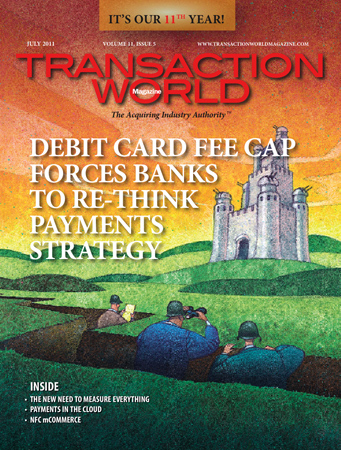 As the maritime industry is increasingly focused on protection of data assets, I thought it would be beneficial to include an article on the topic. This article is one I wrote for TransactionWorld in July, 2011. It is titled: “Why Regulation Cannot Prevent CyberCrime” and is a continuation on the discussion of the impact of deterrence on behavior.
“Data security and privacy regulation have increased significantly over the past 10 years. The U.S. now has 46 state breach notification laws and there have been numerous bills introduced in Congress that propose to regulate personally identifiable information and to dictate security of such data. In spite of this increasing regulation, data breaches continue to plague the industry. Some have proposed that more regulation is the answer. Unfortunately, regulation alone is inadequate to prevent data theft and protect data.
At its core, data theft and network intrusions are crimes. At the risk of oversimplifying the work of criminologists, crime prevention can be summarized as using deterrents to affect protection of assets and prevention of theft. Protection applies to the ‘hardening’ of targets by implementing controls that increase the level of difficulty of perpetrating a crime. A vault is a good example of a protective measure. While no vault is completely impenetrable, vaults do provide significant protective value. Data security controls are protective measures. They are designed solely to limit attempts to obtain the target of value. Without a deterrence effect, criminals are free to attack companies at will without fear of retribution. This article will explore the value of deterrence in the prevention of crime.” (read full article here)

 Global Security, Privacy, & Risk Management