Security Theater- Airplanes, DNA, and Anti-Piracy June 29, 2011
Posted by Chris Mark in Piracy & Maritime Security, Risk & Risk Management.Tags: Chris Mark, InfoSec, Maritime Security, security theater
add a comment
Bruce Schneier, in his book Beyond Fear, coined the phrase security theater. Security theater describes describes security countermeasures intended to provide the feeling of improved security while doing little or nothing to actually improve security. One of the clearest examples is that of US airport security. The guards checking people (randomly, I might add) is intended to make people feel as if they are more secure while really doing little to address the the risks to which airliners are exposed. Today I read an article in which the Contact Group on Piracy off the Coast of Somalia or the clumsily named CGPC had announced it is building a DNA database of Somali pirates. This database is due to be completed by 2012 and is intended to help cut off funding for pirates. According to the president of the organization proposed database will be a “base for other international actions against piracy” in waters off Somalia. While it is nice that something is being done, the question must be asked as to whether this is the right approach.
Another example of Security Theater is the joint patrols in the Gulf of Aden. The Gulf of Aden is approximately 205,000 square miles and the Arabian Sea is approximately 1.5 million square miles. Task Force 151 is a multinational task force which consists of between 14-15 ships (usually). It does not take a brilliant mathematician to see that 15 ships cannot patrol 205,000 square mile effectively. Spread equally, each ship would be responsible for about 13,666 square miles. When the Arabian Sea or Indian Ocean are included, the Task Force is anemic to say the least. In spite of this, the task force maintains that while it is not exactly winning the battle, it is not losing either:
“We are not fighting a losing battle. There has not been a successful piracy attack on merchant vessels since the end of April,” Commodore Tim Fraser, a regional maritime commander, told journalists aboard the amphibious assault ship Albion.
“There has been no successful piracy event in the Gulf of Aden since September last year. Although I would not wish to give an indication that this is sorted out, because it is not,” he told a news conference.
While these statistics, if true, are to be lauded the reality remains that the first quarter of 2011 has seen the most pirate attacks on record and has shown the pirates to be increasing in violence and sophistication. The fact remains that approximately 600 crew members remain as hostages of pirates as due scores of ships.
Growing up in Texas I remember racing my motorcycle through desolate West Texas and reading signs that warned “traffic monitored by aircraft”. As a teenager, I slowed down until one day I had an epiphany. Aircraft are expensive to fly and maintain. To use aircraft to catch the odd speeder simply did not make economic sense. From that day forward I raced like a bat out of hell on my motorcycle. In spite of frequently exceeding 120 mph, I was never once caught by one of the airplanes.
While many of the proposed controls are intended to keep traffic flowing by increasing the confidence of air travelers and ship owners (managers, masters) the reality is that many of the current practices are less effective at actually preventing piracy than they are at making people believe they are preventing piracy. A critical look at the numbers tells a more accurate story. Do not be taken in by security theatrics. The only way to ensure safe transit in pirate infested waters is to take personal accountability for the ship and her crew.
IMO Issues Guidance to Stakeholders on Use of Armed Guards June 28, 2011
Posted by Chris Mark in Laws and Leglslation, Piracy & Maritime Security, Risk & Risk Management.Tags: Chris Mark, IMO, InfoSec, Maritime Security, Piracy & Maritime Security
add a comment
In the circular MSC.1/Circ.1405 dated May 23, 2011 the International Maritime Organization issued guidance to shipowners, operators, and masters on the use of privately contracted armed security personnel aboard ships. As stated in the document, the purpose is to:
“…assist shipowners, ship operators and ship masters considering the use of PCASP on board ships to provide additional protection against piracy.”
The document includes a number of criteria for identifying, and vetting contracted armed security personnel. I feel that one of the most important is that which states that owners, operators, and/or masters should verify:
“availability of documentary evidence that firearms are procured, transported, embarked and disembarked legally;”
There is evidence that a few companies have armed ships using weapons procured through less than ideal circumstances (for the owners, operators, and masters) and may expose the shipping stakeholders to risk.
Somali Pirates using Blogs and GPS to Hunt Ships June 23, 2011
Posted by Chris Mark in InfoSec & Privacy, Piracy & Maritime Security, Risk & Risk Management.Tags: Chris Mark, InfoSec, InfoSec & Privacy, Maritime Security, operational security, Piracy & Maritime Security, privacy
add a comment
Consistent with industry expectations, Somali pirates are increasingly turning to high technology to hunt high-value ships. According to Techland, pirates are using GPS, as well as social media such as shipping company blogs to identify and hunt ships for attack. According to an article in Fast Company:
“In addition to random attacks on cargo and passenger ships, Somali pirates are increasingly relying on the use of GPS systems, satellite phones, and open-source intelligence such as shipping industry blogs in order to figure out the location of ships. Much of the technological infrastructure used by the pirates is allegedly located in the Somalian city of Eyl, which has been described as the ‘piracy capital of the world.’
It is paramount that shipping companies recognize the new threats and understand that the protection of vessels and their crews extend beyond physical security and armed guards. Ensuring that operational security processes are employed is as important, if not more important, than simply arming ships. A review of the maritime security industry show a distinct lack of expertise in information security.
Economics of Piracy June 20, 2011
Posted by Chris Mark in Piracy & Maritime Security.Tags: Chris Mark, InfoSec, Maritime Security, Piracy & Maritime Security, risk management
add a comment
Geopolicity published a very good study in May 2011 which surveys the earnings of pirates and analyzes the economics of the maritime piracy industry. While it is no surprise that piracy is increasing significantly off the coast of Somalia but the report articulates why it is growing at such a pace. With an estimated 1500-3000 pirates operating in the Somalian waters alone, attacks are increasing at a breakneck pace. In the first quarter of 2011, there were 117 identified attacks which resulted in 338 people being taken captive and 7 crew members killed. Average ransom paid was between $3.5 and $4.5 million US. According to the survey Somali pirates earn between $33,000 – $79,000 US per year with a potential lifetime earning of between $168,000 and $394,000. When compared to the US median income of roughly $34,000 per year, it seems like piracy pays well. When compared to the average per capita income of $500 per year in Somalia, it is easy to see why piracy is so attractive. The income earned by pirates is between 679% and 1,570% higher than the average Somalian. The report estimates that the current cost of piracy is between $4.3 and $8.5 billion per year increasing in 2014 to $13 and $15 billion per year. In short, it is a growth industry.
Cyprus to Legislate Allowing Armed Guards on Ships June 20, 2011
Posted by Chris Mark in Laws and Leglslation, Piracy & Maritime Security.Tags: Chris Mark, InfoSec, Maritime Security, Piracy & Maritime Security, security
add a comment
Cyprus is poised to become the first European country to legislate allowing guards on 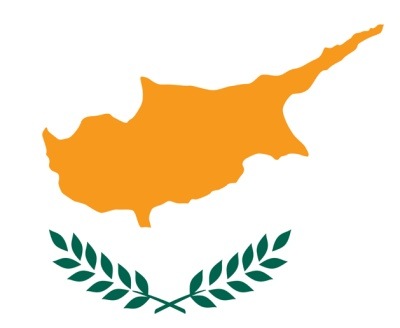 ships to fire on pirates to defend the ship. Recognizing the seriousness of the increasingly frequent and violent attacks on ships, Cyprus is preparing draft legislation which would allow ships sailing under the flag of Cyprus to use armed guards as part of the ships defense. The conditions under which the guards will be allowed to engage the pirat es will be strictly controlled under the law. “Guards will not be allowed to fire first,” said George Mouskas, president of the Cyprus Union of Shipowners. According to Mr Mouskas, the move to allow armed guards on board is primarily meant to be a deterrent as pirates largely avoid well-defended vessels. Tellingly, Mr. Mouskas states: “no ship that has armed guards on board has ever been taken by pirates, so it has been very effective,”
This marks a watershed moment in maritime security and makes a definitive statement that armed security is needed to protect ships and their crews from the increasingly violent attacks. The Cyprus government is to be applauded for their efforts and vision on this front.

 Global Security, Privacy, & Risk Management