Snipers on Ships….Good Idea…or Overkill? (Pun Intended) January 26, 2012
Posted by Chris Mark in Piracy & Maritime Security, weapons and tactics.Tags: Chris Mark, Maritime Security, mark consulting group, Piracy & Maritime Security, Scout Sniper. Royal Marine Sniper, weapons
add a comment
 I was reading a website today of what appears to be a new entrant into the maritime security world. It is clear that they are trying to differentiate their services by offering ‘Maritime Marksmanship’ services. According to the website, their former Royal Marine Snipers can add protection to 900 meters by adding precision, long range fire. As a former US Marine Sniper I am very familiar with, and have great respect for the Royal Marines’ sniper course and while we like to argue and debate with each other over whose course is superior, the truth is that the discussion is academic. Whether you believe it is the USMC or our UK brethren, the reality is that they are both arguably the most rigorous sniper courses in the world. We will continue to argue 😉 So back to my post.
While I don’t disagree that having trained snipers onboard provides a level of precision shooting, the question that must be asked is “how much is good enough?” The truth is that not a single armed vessel has been successfully hijacked to date. Many of the vessels are armed with M4s (or varients), AK 47s, G3s, FALs etc. Is there truly at need at this juncture for a trained sniper on board? A more fundamental question, I think, is whether you increase liability by placing a sniper onboard. If a pirate is approach a vessel at high speed and shooting then there is a threat. Using the force continuum it is expected that first evasive maneuvers are taken, followed by warning shots etc. If they approach close enough then, possibly, you need to take more direct action and fire at the assailants. International law is still somewhat unclear as to when you can and cannot use deadly force on a suspected pirate. I question what would happen to the shooter if he shot a pirate out of a boat at 900m. It would be extremely difficult to justify such a shooting as ‘defensive’. (I suspect such a shot would be nearly impossible for any trained shooter…see next post as to why).
I believe at this point that having trained Commandos, US Marines (with appropriate background), or other well trained military members provides sufficient protection against pirate attacks. Any Commando, US Marine, Ranger etc. with an M4, or similar weapon system can engage a target to 300 meters with relative ease. Extending this range to a theoretical 900 meters does not, in my mind, reduce risk but may actually increase the risk should a suspected pirate be engaged at that distance.
For companies considering maritime security, it is suggested that the following be considered before considering the more esoteric aspects of armed services.
1) Are the company’s leaders experienced in maritime security and have they established and documented operating procedures consistent with the rules of force and international law? You do NOT want a bunch of gunslinging cowboys on your ships. Consider BlackWater as an example of what happens when undisciplined people with weapons are unleashed.
2) Are the armed guards appropriately vetted and trained? As much as I love my USMC, the fact remains that in the USMC, we have a number of Marines that are cooks, mechanics, etc. In the UK, all Marines are Commando trained. The point being that just because someone has a particular title, does not mean they are right for the job. Ensure that the company is selective and vets their personnel. Additionally, ask about following on training. Are the guards taught the rules of force?
3) Are the guards provided with appropriate kit and weapons? I have heard horror stories of guards being deployed with Moisan Nagant rifles, and other ‘pre WWII’ weaponry. While the debate over whether .50 sniper rifles provide good fodder for arguments, at a minimum the guards need to be armed with effective, modern weapons in working order. M4s, G3, FAL, M14s, AK 74, AK 47 are probably all sufficient to rappel an attack by Somali pirates. I personally do NOT believe that a shotgun is sufficient. A shotgun is great for close quarters fighting but does not have the range or accuracy to defend against an attacker with an RPG or AK 47.
4) Does the company’s principals have experience with maritime traditions, rules, and communications? It is imperative that the guards understand how to work on ships and how to interact with the ship’s officers and crew. Ultimately, it is the ships captain that has responsibility for the vessel and her crew. The guards need to understand how to integrate into the ship’s plans to ensure effective protection of the vessel.
Pakistan training pirates? August 30, 2011
Posted by Chris Mark in weapons and tactics.Tags: Chris Mark, InfoSec, Maritime Security, Piracy & Maritime Security, somali pirates
add a comment
According to an article published on Zeenews India claims to have “material evidence” that Somali pirates are receiving training in Pakastan. According to the article, the training is intended to support a proxy war against India. Whether this assertion stands up to scrutiny remains to be seen. If however, Somali pirates are receiving formal training by foreign governments it would suggest a much deeper problem for shipping companies. As the story develops we will provide more information.
Taiwanese Captain Killed by US Ordnance during AP Operations July 24, 2011
Posted by Chris Mark in Piracy & Maritime Security, weapons and tactics.Tags: Chris Mark, gulf of aden, InfoSec, Rudyard Kipling, Somalia
add a comment
According to the Taipei times a Taiwanese shipping captain was killed when when the US Navy disabled the JCT 68 with munitions during anti-piracy operations. The ship had been hijacked and used as a pirate “mothership” since March 30, 2010. This post will no go into great detail on this particular event rather let this be yet another example of why it is too late to act AFTER the pirates have taken control of the ship. Rudyard Kipling wrote about the British combat in Afghanistan. His poem the Young British Soldier was intended to provide both insight into the situation as well as direction for young soldiers. One of the last stanzas says:
“When you’re wounded and left on Afghanistan’s plains,
And the women come out to cut up what remains,
Jest roll to your rifle and blow out your brains
An’ go to your Gawd like a soldier.
Go, go, go like a soldier,
Go, go, go like a soldier,
Go, go, go like a soldier,
So-oldier of the Queen”
The point of this post is that in some instances being captured by certain people is so horrific that it is likely better to “…go to your Gawd like a soldier” than be captured. I was in Somalia in 1994 and have seen first hand some of the atrocities that people who have been born and lived in a persistent state of combat can inflict upon their fellow man. While this post is not intended to articulate these atrocities I would suggest that whether on the plains of Afghanistan or on a ship being hijacked by Somali pirates, one is better served to take any action possible to keep being placed in their hands.
So what is the answer to the increasingly aggressive and violent pirates? From a tactical perspective it is a comprehensive practice of defense in depth with the final piece being professionally trained and experienced armed guards on ships. Certainly from a strategic level we all want their to be stability in Somalia to deal with the issue but as of right now it is imperative that shipping companies take steps to ensure their crews do not fall into the hands of Somali pirates.
Dulce Bellum Inexpertis July 21, 2011
Posted by Chris Mark in Piracy & Maritime Security, weapons and tactics.Tags: Chris Mark, InfoSec, Maritime Security, Piracy & Maritime Security, risk management, Somalia
1 comment so far
Loosely translated as war is sweet to those who have never experienced it the latin phrase is particularly relevant today. On LinkedIn and other sites, people are crying out for “shooting pirates on site!”. While this sounds emotionally compelling at times, it should be carefully considered. Many armed guards in the industry today have combat experience. While these men (they are all men) are capable of action to prevent a ship hijacking each one will tell you that their preference is to see the ship out maneuver or out run the pirates rather than shoot a single shot.
It is always easy to view gunfights as depicted in movies. The reality is a lot less entertaining and certainly more frightening than depicted. It is always a bit dismaying to hear people talk of ‘killing pirates on sight’ and ‘bombing them into submission’. While pirates are a plague that we need to protect against, we need to be cognizant of the consequences.
Currently there are estimated to be 29 ships and over 600 people being held by pirates in and around Somalia. What would or could happen to the hostages if pirates were “shot on sight”? Pirates in Somalia are currently demanding reparations from South Korea for an attack that killed several Pirates? In addition, there rumor that Pirates are currently searching for some European ships that inadvertently killed some fishermen in the belief that they were pirates. What will happen to the crews of the ships?
I am not advocating for a catch and release program or treating pirates with kid gloves. The reality of defense is often more complex than it may appear. While ‘shooting on sight’ may sound appealing, it is not quite as simple as it sounds.
Tanker with Millions of Barrels of Oil Ablaze In GoA July 6, 2011
Posted by Chris Mark in Piracy & Maritime Security, weapons and tactics.Tags: armed security, Chris Mark, InfoSec, maritime piracy, Maritime Security, Piracy & Maritime Security
add a comment
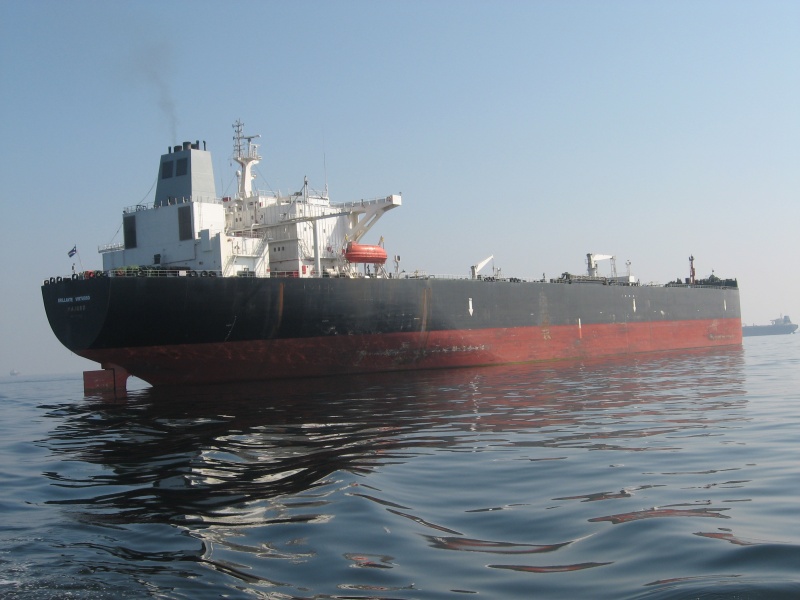 Bloomberg reports that an oil tanker was attacked approximately 20 miles from Aden and wet ablaze. The 274m Brillante Virtuoso was attacked by pirates in the Gulf of Aden and reported ablaze at 0037z. The 26 crew members are reported to be OK and the ship is currently being pulled by two tugs. The ship was attacked when approaching port to take on unarmed guards, it is reported.

 Global Security, Privacy, & Risk Management