GPS At Risk of Jamming… February 23, 2012
Posted by Chris Mark in InfoSec & Privacy, weapons and tactics.Tags: Chris Mark, GPS, jamming, mark consulting group, privacy, security
add a comment
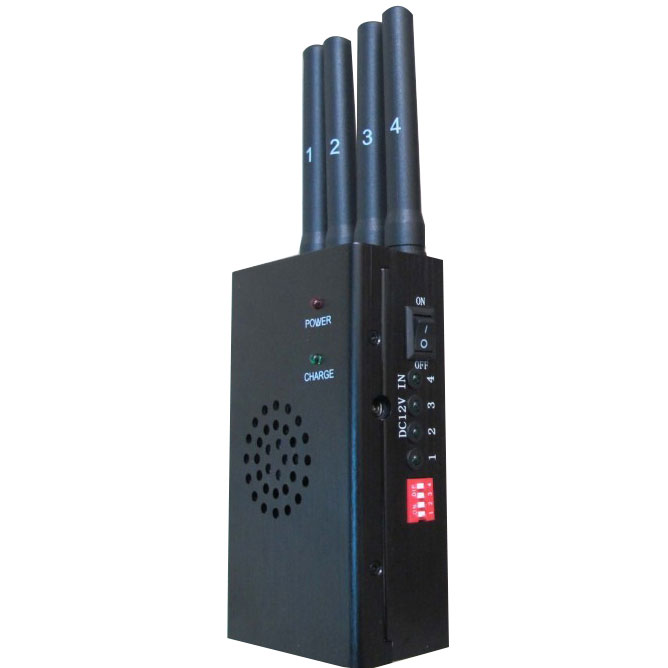 There is a good article on Foxnews about the risk of the GPS network. Our GPS network is a series of satellites that are geosynchronous orbit about 12,000 above Earth. Basically your GPS receiver receives a time code from three or more satellites and calculates the position by simple triangulation. The civilian satellites are ‘open’ and require not authentication and have no encryption although the military GPS can use encryption. According to Todd Humphries of the University of Texas: “The civil GPS signal’s completely open and vulnerable to a spoofing attack, because they have no authentication and no encryption,” … “It’s almost trivial to mimic those signals to imitate them and fool a GPS receiver into tracking your signals instead of the authentic ones.” If you consider how prevalent GPS has become it could clearly be a target for terrorists or others with bad intentions. In doing some basic research I found a number of GPS jammers on sale over the Internet for between $100US and $500US. It should be noted that GPS jammers are illegal in the US.
Playing in Mogadishu – The Dangers of False Security and the Value of Situational Awareness February 23, 2012
Posted by Chris Mark in Risk & Risk Management, weapons and tactics.Tags: Chris Mark, cybersecurity, mark consulting group, security, situational awareness, USMC, weapons
add a comment
 UPDATE: This is a great video that shows the difficulty in reacting with a concealed weapon. Let me be clear, I am a proponent of the 2nd Amendment but I think that people place too much trust in their firearms without proper training.
Recently, I was discussing gun laws and other issues with some gentlemen with whom I used to work. I live in a state (Utah) that has very liberal gun laws and a LOT of people who carry concealed firearms. A short 4 hour class with no proficiency testing any adult that is a US Citizen without a felony can carry a concealed weapon in Utah. This is a scary proposition to many (including me). The men were talking with full confidence about how they feel more safe with their guns. They referenced a few situations in which some woman had been assaulted and stated with full confidence that if the women had been armed, the assault would not have occurred. I explained to them that it is more important to have situational awareness than it is to have a weapon. (more…)
Egypt States Position on Armed Guards and Weapons February 22, 2012
Posted by Chris Mark in Industry News, Piracy & Maritime Security, weapons and tactics.Tags: armed security, Chris Mark, Egypt, Maritime Security, mark consulting group, markconsultinggroup.com, Piracy & Maritime Security, UK P&I
1 comment so far
 UK P&I Club released a bulletin that outlines Egypt’s position on armed guards and weapons within Egypt and its waters. Below are the salient points of the letter received from the Egyptian Government:
“1) The Egyptian Government forbids the presence of any Weapons / Armed Guards on
board of commercial vessels as per the rules and regulations of the International Maritime Organization. (more…)
Security 101: “You don’t have to out run a bear…just your friends” February 22, 2012
Posted by Chris Mark in InfoSec & Privacy, Piracy & Maritime Security, Risk & Risk Management, weapons and tactics.Tags: armed security, arms race, Chris Mark, cybersecurity, InfoSec, Piracy & Maritime Security, risk, risk management, security
add a comment
 Yesterday MSNBC had a story that discussed the “arms race” between Somali pirates and shipping companies. The article discussed the increasing violence of the pirates. While this should come as no surprise to anyone, it is a single statement that caught my attention. “Greater use of private armed security guards on ships and a much tougher approach by international navies is beginning to work, some… say. (more…)
Realities of Precision Marksmanship from a Ship… January 26, 2012
Posted by Chris Mark in Piracy & Maritime Security, weapons and tactics.Tags: Chris Mark, mark consulting group, realpolitik, Scout Sniper, sniper
2 comments
This is an excerpt from the post Realpolitik, Piracy and Armchair Quaterbacks. It is intended to supplement the previous post Snipers on Ships…
The article was referring to piracy within the Gulf of Aden and specifically off of the coast of Somalia. In the article, the author writes:
“All we need to do (emphasis added) is declare that for ships on the high sea, a 300-yard radius around the vessels is a limited access zone. Anybody closing in farther without permission will be assumed to be hostile. First, warning shots will be fired across their bow; if this will not do, shoot to kill.
True, this means that merchant ships will need some armed marshals, as do many flights. However, given that the ships are tall and the pirates need to mount them from their small boats, a few armed guards can do the job.”
Here is where theory and practice diverge and armchair quarterbacking takes over. It is easy to be an armchair quarterback (or in this case ship’s crew) when it is not your own very expensive ship on the line or your own life on the line when the RPGs start flying. I can say from personal experience that it is less fun being shot at in real life than the movies may suggest. Additionally, the article ignores the much larger socio-political aspects of piracy.
To understand the feasibilityof what the author suggested let’s dissect what he is saying a little more closely. He states that a 300 yard radius should be imposed around the ships.
In Somalia pirates are attacking ships using small skiffs that often travel over 40 knots (~46 mph). Their skiffs are small, lightweight and agile. The pirates attack ships using multiple boats and primarily carrying RPG-7 rocket propelled grenades, PKM machine guns, and AK-47 assault rifles. They have little fear and are very aggressive. In short, these guys are armed to the teeth and very capable.
On a 30ft x 8ft target moving at 9 mph the US Army gives the RPG 7 a hit probability of 22% at 300 meters, 51% at 200 meters, and 96% at 100 meters. If one considers that the bridge or rudder of ship is the target and doubles the size of the target listed in the Army study, it is fair to say the hit probability doubles, as well. This means that at 300 meters, the pirates have a 50/50 chance of hitting the bridge or rudder and doing serious damage to the ship. If a pirate gets within 200 meters of the ship, their chance of a hit increases statistically to 100%. The answer, according to the author, is to “…fire warning shots across their bow; if this will not do, shoot to kill.”- If they get within 300 meters. The author then goes on to say that: “a few armed guards can do the job.”
As a former Marine sniper with combat experience, I would consider myself competent with a number of different weapons systems. I also have experience guarding ships in Somalia. I can say with absolute confidence that firing: “…warning shots across their bow..” and then: “…shoot(ing) to kill…” at a moving target on the open ocean 300 meters away is a lot easier for action stars like Matt Damon or Sylvester Stallone in thier movies than it is for real people in real situations. In fact, what the author is proposing is very difficult. To demonstrate some of the challenges, let us take a quick look at what is involved.
Consider that you are on a ship which is travelling 10 knots (creating a wind that affects the shot that this article will not address). Consider that you now also have to keep your sights on a very small skiff travelling at 50 knots at 300 meters all while the ship and the boats are bouncing on the ocean swells. Assuming the skiff is traveling parallel with your own boat its relative speed is 40 knots. At 40 knots, the skiff is travelling at almost 67.5 feet per second or the length of a football field every 4.4 seconds. This means that with a .300 Winchester Magnum round travelling 3050 feet per second, a shooter would need to lead the boat 24.25 feet on a stable platform to account for the speed of the boat and the .36 seconds it takes the bullet to traverse the 300 meters (accounting for decease in velocity for you math geniuses). This basic calculation does not account for the vertical movement of the ship or boat or the relative movement between the ship and the boat nor does it account for any wind that may be present. Assuming your target is a person and is 1.2 feet across it is in the ‘hit zone’ for only .013 of a second when travelling at 40 knots. This means that your lead ‘cushion’ is only .9 feet or 10.8 inches. In short, if you lead more 25.04 feet or less than 23.36 feet, you have missed your target completely. If your lead is perfect and you have miscalculated the distance of your target by only 10 meters, you have also missed your target.
Suffice it to say that shooting at a small, high speed target while on a moving platform is more than difficult. It is extremely difficult. Couple this with the fact that the pirates are masquerading as fishermen and you have compounded the issue because nobody wants to make a mistake and hurt an innocent person.

 Global Security, Privacy, & Risk Management