New Domain! www.GlobalRiskInfo.com December 17, 2011
Posted by Chris Mark in Uncategorized.Tags: Chris Mark, GlobalRiskInfo, gulf of aden security, InfoSec, Maritime Security, Piracy & Maritime Security, risk management, security, somali pirates, Somalia
add a comment
 Starting tomorrow (Sun, Dec 18th, 2011), the blog will have a new domain. You can find us at the current wordpress subdomain of https://maritimerisk.wordpress.com or you can simply type www.GlobalRiskInfo.com (not case sensitive). The blog will be expanding into other areas of risk including information assurance, physical security, and financial risk.
Massive Storm Grounds Tanker in France…now leaking oil December 16, 2011
Posted by Chris Mark in Uncategorized.Tags: Chris Mark, grounded cargo ship, Maritime Security, northern france, washington post
add a comment
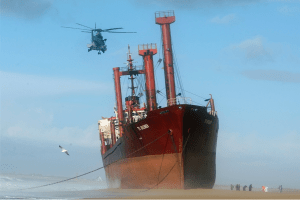
A cargo ship ran aground off the Northern coast of France and is spilling oil off the Northwest region of Brittany. While tragic, the pictures are pretty incredible. Read the story on The Washington Post and check out the photos on MSNBC’ photblog! The photos below are from MSNBC.

Attacks down 65% & Hijackings down 85% from November 2010 December 13, 2011
Posted by Chris Mark in Uncategorized.Tags: Chris Mark, Maritime Security, Piracy & Maritime Security, somali pirates, Somalia
add a comment
According to a story published by BBC News, attacks on vessels in November 2011 were down 65% from 35 in November 2010 to 12 in November 2011. Additionally, while 7 of the 35 attacks resulted in a hijacking in 2010, only 1 of the 12 attacks was considered ‘partially successful’. The decline in attacks and hijackings can be attributed to several factors. First, more ships are employing armed guards, second more ships are adhering to BMP4 and finally, the naval presence in the region is deterring attacks. It will be interesting to see if the trend continues or if the pirates simply become more bold, or more violent in their pursuit of ransom money.
US Compliance; FFL & ITAR December 12, 2011
Posted by Chris Mark in Uncategorized.Tags: Chris Mark, FFL, ITAR, Maritime Security, Piracy & Maritime Security, weapons
add a comment
The United States allows both individuals and companies to purchase firearms for personal as well as business use. Much to the surprise of many (even other Americans), it is a right to own automatic weapons and silenced weapons assuming the proper checks have been passed and taxes paid. The US also allows companies to export US firearms with the appropriate licenses. The ability to obtain firearms at a low cost and export those firearms gives US companies some advantages in armed security. That being said, there are some very strict laws with which companies and individuals must comply. Understand that these are Federal US laws and state laws may vary.
If your company is thinking about doing business with a US company, it is imperative that you know the rules and ensure that your vendor is in compliance. If they are not in compliance, both the vendor and your own company may come under scrutiny and, at worst, may have legal implications.
Federal Firearms License (FFL)– This license allows individuals and companies to ‘own’ ‘manufacture’, and ‘sell’ firearms including pistols, rifles, shotguns, and the like. A ‘class 3’ license also allows for the ownership, manufacturing, and sale of prohibited firearms such as automatic weapons, suppressors, and short barreled weapons. In short, if a US company is claiming to have access to firearms they must possess an FFL and (this is important) all firearms must be owned under the company’s name and company’s FFL. Remember, in the US individuals can own firearms. It is easy for someone to purchase firearms under their personal name and claim that they are owned under the FFL. The Bureau of Alcohol Tobacco and Firearms (ATF) requires very strict documentation for all firearms bought, sold, manufactured, modified, or disposed of under and FFL.
International Arms Traffic in Arms Regulation (ITAR) controls the importation and exportation of ‘defense articles’. This includes firearms, night vision equipment, and other items that are controlled by the US Government. The ITAR is a component of the US’ Arms Export Control Act of 1976. The US Government strictly prohibits and controls the export of certain firearms and other technology. The act does allow, however, individuals to travel with up to 3 firearms for ‘personal use’ (Such as hunting) provided the individual returns with the firearms. Disposing of the firearms is a felony.
When evaluating a US company with which to do business it is not enough to know that they have an FFL and ITAR. You want to ensure that the company is in compliance with the regulations. I have a drivers’ license but if I consistently drive while intoxicated, I am not in compliance with the license. Here are some questions that you can ask your vendor. Always get evidence of the answers and documented proof for your records.
1) Are all firearms used in conjunction with the contract purchased and owned under the company’s FFL?
2) Are only firearms registered under the FFL exported under the ITAR license? (for each transit ensure that a list of firearms and serial numbers are listed for your records)
3) Are all firearms returned to the United States in accordance with the ITAR license?
The last point is particularly relevant and includes components of the first two. Since many merchant vessels are operating close to areas that are on the US” prohibited list (Sri Lanka, for example), US companies are under particular scrutiny in these areas. If the firearms are exported to the US and into the theater and then simply ‘disappear’ or are not returned to the US it could raise serious issues for the vendor and their clients. Obviously, the US government is concerned about firearms being put in potentially the wrong hands.
**As another important point, the ITAR only allows for the exportation of firearms from the US, the vendors are responsible for obtaining all relevant licenses in countries in which the firearms will be transferred through or used. Failure to do so can result in arrest and/or prosecution in the country in which the firearms are transferred.
In addition to obtaining all ITAR and FFL information, ask for evidence of appropriate licenses in foreign countries, as well.
By following these simply rules, and asking a few questions you can have confidence that your security vendors are operating in a manner consistent with the US Government regulations.
Bosnia & Scott O’Grady December 2, 2011
Posted by Chris Mark in Uncategorized.Tags: maritime piracy, Maritime Security, Scott OGrady, USMC
4 comments
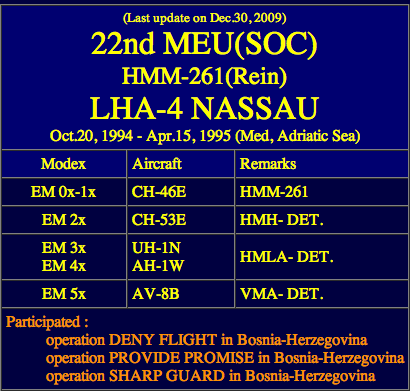 I recently came across a former Marine Reservist who was claiming to have helped save Captain Scott O’Grady. To remind everyone, Scott O’Grady was the F16 pilot who was shot down in Bosnia in 1995. He evaded capture for a week or so and was rescued by the Marines.
I read this bio and thought…”this doesn’t seem right”. As any military vet from any service can tell you, it is often not too difficult to pick out a fraud. Anyhow, he claims to have helped save Scott O’Grady in 1995 while with the 22 Marine Expeditionary Unit, Special Operations Capable (MEU SOC). Here is where the story breaks down.
Marines deploy in MEUs. In short, a battalion of Marines and their support will jump on ships and float around either the Mediterranean or Western Pacific (or elsewhere) for about 6 months at a time doing training or supporting missions. It is a way of life in the Fleet Marine Force. Your world revolves around ‘floats’. So, the 22 MEU floated from Oct 20, 1994 – April 15, 1995. They were replaced by the 24 MEU. It just so happens that I served with the MEU CO and Battalion SGTMajor in Somalia in the previous deployment of the 24 MEU. Captain Scott O’Grady was rescued in June, 1995 by the 24 MEU as Colonel Burndt was the CO. In short, the 22 MEU was back home on leave when Scott O’Grady was rescued. More bizarre is I have a picture taken in Hawaii while doing amphibious exercises in June, 1995. I question how he could have been in K Bay with the unit during the day and then rescuing Scott O’Grady in Bosnia at night? Maybe I am simply not ‘high speed’ enough to understand.
In today’s world, there are many people who have served in Iraq and Afghanistan. There are others who want to appear ‘larger than life’ and will attempt to embellish their records to achieve some level of ‘credibility’. Always question the military service of the person with whom you are speaking. You may find out that it is not quite what has been told.

 Global Security, Privacy, & Risk Management