New Author’s Website for Chris Mark September 24, 2025
Posted by Chris Mark in Uncategorized.Tags: abuse, Addiction, alcoholism, author, Chris Mark, dating, Marine Sniper
add a comment
After writing my 4th book I thought it may be time to actually get a website. You can check out all of my books here. I hope you enjoy! Take a look!

The Trap of Reactive Abuse: When Victims Become Perpetrators in the Eyes of Others September 20, 2025
Posted by Chris Mark in Uncategorized.Tags: abuse, Chris Mark, gaslighting, male domestic abuse, Mental Health, psychology, reactive abuse, relationships, trauma
add a comment
What is Reactive Abuse?
“Reactive abuse occurs when someone who has been abused begins to defend themselves by responding to abuse with physical and/or verbal attacks, says Alexa Connors, LMSW, a senior therapist at The Dorm, which offers intensive trauma therapy for young adults.”

“Baiting and Harvesting Cycle
Reactive abuse rarely occurs spontaneously but is often the result of deliberate provocation designed to elicit exactly this response. Skilled emotional abusers understand their victims’ triggers and systematically exploit them until the victim “breaks” in ways that can be documented and used against them (Durvasula, 2019; Simon, 2010).
This process, sometimes called “baiting and harvesting,” involves several calculated steps:
Strategic provocation: The abuser identifies the victim’s vulnerabilities, perhaps their love for their children, professional pride, or core values—and systematically attacks these areas. For male victims, this often involves sustained attacks on their masculinity, competence, or worth as partners or fathers (Morgan & Wells, 2016).
Escalation timing: Provocations are often timed to maximize their impact and the likelihood of an explosive response. Research by Bates (2020) found that abusers frequently escalated attacks when their male partners were already stressed from work, health issues, or other life pressures, making emotional regulation more difficult.
Documentation preparation: Many abusers ensure they have witnesses present or recording devices ready when they push their victims to the breaking point. Studies by McCarrick and colleagues (2016) documented cases where female abusers recorded their male partners’ angry responses while carefully editing out their own provocative behavior.
Narrative construction: Once the reactive abuse occurs, it becomes the central focus of the abuser’s story. The months or years of systematic mistreatment that led to the reaction are minimized or omitted entirely, creating a narrative where the victim appears to be the primary aggressor (Cook, 2009).”
If you are someone you know is in an abusive relationship, get help. They can be insidious and you may not realize until you are out. I didn’t.
New PodCast- Anocracy, Democracy and the US! February 13, 2024
Posted by Chris Mark in Uncategorized.Tags: Biden, Chris Mark, Constitution, democracy, elections, polity, Republic, tyranny of the majority
add a comment
Below is my latest podcast. It discusses democratic governance in the context of the United States being a Constitutional Republic. There is, I think, a lot of good information contained in the podcast but I may be biased! ;) I hope you enjoy!
New PodCasts! “A Sniper’s Perspective” February 9, 2024
Posted by Chris Mark in Uncategorized.Tags: Chris Mark, cybersecurity, Podcast, politics, Reconnaissance, sniper, Ukraine
add a comment
I recently took some friends’ advice and began podcasting. I seem to have a lot to say so decided to become the next Joe Rogen ;) Hopefully, I will sound more like Joe Rogen than Joe Biden!! I invite you to listen to my podcast, A Sniper’s Perspective on Spotify, Youtube, PocketCast or just right here! Below is a fun podcast I recorded yesterday on becoming a ScoutSniper.
Chinese Cyber Attacks and Unrestricted Warfare February 1, 2024
Posted by Chris Mark in Uncategorized.Tags: ai, artificial-intelligence, asymmetric threats., china, Chris Mark, cyber war, cybersecurity, technology, unlimited warfare, War
add a comment
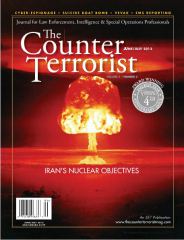
I first wrote about this phenomenon in 2012. It is becoming reality. The recent cyber-attacks attributed to the Chinese government on American infrastructure can be analyzed within the conceptual framework of “unrestricted warfare,” a doctrine developed by two PLA Colonels, Qiao Liang and Wang Xiangsui, in response to the perceived military superiority of the United States. This doctrine signifies a strategic shift from traditional, kinetic warfare to a multifaceted approach incorporating a broad spectrum of tactics including economic, political, and PR maneuvers to conduct ‘sub wars’ and ‘pseudo wars’.
At the core of unrestricted warfare is the recognition that the principles of war have evolved. As the authors state, “If we acknowledge that the new principles of war are no longer ‘using armed force to compel the enemy to submit to one’s will,’ but rather are ‘using all means including armed force and non-armed force, military and non-military, lethal and non-lethal means to compel the enemy to accept one’s interests’”[1]. This perspective broadens the scope of warfare to encompass non-traditional methods such as economic manipulation, cyber-attacks, and disinformation campaigns, transcending the conventional battlefield.
The Chinese cyber-attacks on the U.S. infrastructure, as reported in the aforementioned sources, align with this doctrine. These attacks represent a strategic choice to exploit vulnerabilities in critical systems to cause disruption and potential societal panic, without resorting to open military confrontation. This approach fits into the broader pattern of asymmetric threats.
Asymmetric threats, characterized by a disparity in the means and methods between different adversaries, are further defined by three criteria: the involvement of a tactic that one adversary could and would use against another, the unique ability or willingness of the adversary to use such means, and the potential for serious consequences if these means are not countered. In the cybersecurity realm, these threats take on a significant role. A minor actor with basic hacking tools can compel major entities to invest heavily in defense, illustrating the asymmetry in resources and efforts between attackers and defenders.
The Chinese strategy, as evidenced by the cyber-attacks, meets these criteria of asymmetric warfare. It involves tactics that the Chinese government is capable and willing to employ, which the U.S. would not mirror. The potential consequences of these attacks are severe, necessitating significant defensive measures.
Further aligning with the principles of unrestricted warfare, the authors note that unconventional methods can be formidable weapons in modern conflict. They observe, “As we see it, a single man-made stock-market crash, a single computer virus invasion, or a single rumor or scandal that results in a fluctuation in the enemy country’s exchange rates or exposes the leaders of an enemy country on the Internet, all can be included in the ranks of new-concept weapons”[2]. This recognition of non-traditional tactics as weapons underscores the expanded battlefield that now includes economic, political, and technological realms.
In conclusion, the Chinese cyber-attacks on U.S. infrastructure, as part of their broader strategic approach, are indicative of the principles of unrestricted warfare. They represent a calculated move to use asymmetric tactics to undermine U.S. strengths and exploit vulnerabilities, extending the battlefield into the cyber realm. This strategy exemplifies a modern approach to warfare, where the lines between military and non-military means are blurred, and the battleground extends into multiple domains.
Loading the Elevenlabs Text to Speech AudioNative Player…
References:
- Qiao Liang and Wang Xiangsui, “Unrestricted Warfare.”
- Ibid.

 Global Security, Privacy, & Risk Management