All’s Fair in Love & (Cyber) War September 17, 2012
Posted by Heather Mark in cyberespionage.Tags: cyberespionage, data security, Dr. Heather Mark, information security, InfoSec, Kapersky Lab, Stuxnet, Symantec
add a comment
 A report released today suggests that the United States government is far more involved in the use of trojans and mal-ware than previously thought. The US had previously been linked to the Stuxnetvirus that wreaked havoc on the Iranian nuclear program. Speculation at that point was that the US and Israel had collaborated on the program in an effort to derail Iranian nuclear ambitions. I don’t think many were surprised to hear that supposition. Today, though, Kapersky Lab and Symantec announced that they have found evidence linking the US to three other, previously unknown viruses.
The use of covert operations on “enemy” governments dates back to the beginning of the civilization, really. Sun Tzu writes extensively about the subject and the use of “covert operatives” peppers Greek and Roman history, as well. These historical endeavors share a common purpose with the cyber-espionage that we see today – to gather data, or to provide data, that can be used to bring about the downfall of one’s enemy, or at least provide a significant advantage to the other side. It shouldn’t come as any surprise, then, that any country would make use of the available technology to conduct remote espionage operations.
We know that other countries, China in particular, has a specific focus on launching attacks on Intellectual Property of Western companies. A recent report in the Baltimore Sun highlights the countries singular focus on hiring cyber-soldiers (for lack of a better word): “Experts estimate that North Korea has as many as 1,000 cyber warfare agents working out of China and is recruiting more every day.” When we know that our enemies are fully engaged in cyber-warfare tactics, it would be short-sighted and naive to believe that our government is not fighting back.
“Why does the FBI have your UDID (and 12.4 million more)?” FBI Laptop Hacked…1 million Apple IDS posted online September 4, 2012
Posted by Chris Mark in cyberespionage, cybersecurity.Tags: anonymous, Apple, Christopher Stangl, Cyber Action Team, data breach, fbi, Hacked, mark consulting group, UDID
add a comment

*UPDATE* It was reported yesterday that the FBI laptop was not, in fact, the source of UUIDs that were hacked. A company called Blue Toad revealed that it was the source of the stolen ids. It’s not clear how the data was stolen from Blue Toad or what, if any relationship exists between the company and the laptop that was first identified as the source of the breach.***
According to NBC News, hackers associated with the anti-government group AntiSec have hacked an FBI Agent’s laptop and posted over 1 million Apple Unique Device Identification Number or UDIDs online. The Apple UDID is used by Apple to determine what applications are running and to lock down the phones, IPads and computers from other applications. Alone, they do not represent personally identifiable information but However, New Zealand-based security researcher Aldo Cortesi has shown that thanks to disregard of Apple’s security guidelines by iOS game and app developers, it’s possible to determine a user’s identity through an UDID alone. According to the story:
“The Pastebin post claims that the UDIDs were stolen thanks to an Anonymous hack into the laptop of FBI agent Christopher Stangl, a member of a New York-based cybercrime task force. “During the second week of March 2012, a Dell Vostro notebook, used by Supervisor Special Agent Christopher K. Stangl from FBI Regional Cyber Action Team and New York FBI Office Evidence Response Team was breached using the AtomicReferenceArray vulnerability on Java,” the posting states. “During the shell session some files were downloaded from his Desktop folder one of them with the name of ‘NCFTA_iOS_devices_intel.csv’ turned to be a list of 12,367,232 Apple iOS devices including Unique Device Identifiers (UDID), user names, name of device, type of device, Apple Push Notification Service tokens, zipcodes, cellphone numbers, addresses, etc. the personal details fields referring to people appears many times empty leaving the whole list incompleted on many parts.”
Why the FBI has such a list of over 12 million UDIDs is an interesting question. Why the list would be on a laptop is another interesting question. To check whether your iPhone, iPad or iPod Touch’s UDID might be among those affected, a Unix developer based in Florida has already posted a tool: http://kimosabe.net/test.html
“Cyber Espionage is Alive and Well”; Motorola Employee Sentenced in theft of IP August 30, 2012
Posted by Chris Mark in cyberespionage, cybersecurity.Tags: china, cyber espionage, cybercrime, cybersecurity, Hanjuan Jin, information security, mark consulting group, motorola, security
add a comment
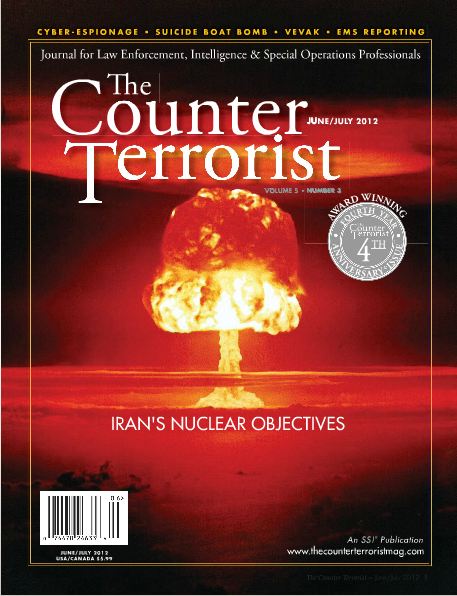 According to a story in CIO, a former Motorola employee was sentenced to 4 years in prison for theft of trade secrets. For more information on the cyber espionage threat, you can read my article: “The Rise of CyberEspionage” published in The Counter Terrorist Magazine.
Below is an excerpt of the CIO article.
“Hanjuan Jin, 41, a nine-year Motorola software engineer, conducted a “purposeful raid to steal technology,” U.S. District Judge Ruben Castillo said while imposing the sentence, according to a statement by the department.
The Judge did not however find her guilty of three counts of economic espionage for the benefit of China and its military, although he found by a preponderance of the evidence, that Jin “was willing to betray her naturalized country,” according to the department. Jin had earlier been convicted by the court of three counts of theft of trade secrets.
Judge Castillo’s order was not immediately available on the website of the U.S. District Court for the Northern District of Illinois, Eastern Division where Jin was on trial.
Jin, who is a naturalized U.S. citizen born in China, was stopped from traveling on a one-way ticket to China on Feb. 28, 2007 at O’Hare International Airport by U.S. customs officials who are said to have seized from her possession more than 1,000 electronic and paper documents from Motorola.”
Companies need to be vigilant and understand that the same techniques used to steal national secrets are being employed in US businesses. While not exclusive to China, they certainly represent the greatest threat today.
“Here I (we) go Again…”; GlobalCerts.net hacked August 27, 2012
Posted by Chris Mark in cybersecurity.Tags: anonymous, cyber war news, data breach, globalcert.net, hack, mark consulting group, PCI DSS, security
add a comment
 On this lovely Monday morning on the opening week of College Football (WAR EAGLE!)…I open with some classic Whitesnake and their awesome song from 1987: “Here I go Again”. It seemed appropriate since here ‘we’ go again with another hack and data compromise. According to Cyber War News, GlobalCert.net was hacked and their data posted to Pastebin..according to the report, GlobalCert.net’s web database was hacked and over 1000 clients’ data posted online by Anonymous. GlobalCert.net’s website says the following about their website:
“GlobalCerts provides a comprehensive solution that meets a full range of secure messaging needs—including an automatic, transparent, inter-organizational secure messaging product, the SecureMail Gateway. GlobalCerts also offers a trusted, scalable, user friendly solution to overcome the hurdle obstructing many organizations from deploying a standards-based, secure messaging solution. SecureTier is a hands-off global, certificate management solution for key creation, discovery, and revocation. No other key distribution and discovery system is as effortless and efficient as GlobalCerts’ solution.”
Seems that GlobalCert.net should practice what they preach 😉
“A Rose by Any Other Name…” – Selecting the Right InfoSec Professional August 22, 2012
Posted by Chris Mark in cybersecurity.Tags: CISA, CISSP, cybersecurity, data security, experts, information security, mark consulting group, qualfications, Social media
add a comment
 Last week I had an experience that left me chuckling and shaking my head at the same time. I had been approached by a company that had some infosec needs. According to the person with whom I spoke, they had found me on LinkedIn and wanted to talk. This company had recently settled with some regulators over some privacy and other regulatory practices and were looking to beef up their security and compliance. I spoke to one person for about an hour and a half and was asked to send more info. Later that week I received a call from the person with whom I had spoken an was informed that the company was looking for someone with INFORMATION SECURITY experience. I (likely not so politely) asked what they thought I did for a living? His response was that the company was looking for someone with a computer science degree. It was curious that they did not say an information assurance degree, or cybersecurity degree…or…list an certifications or skills…simply computer science. Well then…there you have it. Apparently, this company feels the only real qualification for ‘infosec’ is a computer science degree. Considering their previous issues, you would think they would have a better handle on info sec and their needs.
When looking for an infosec professional understand that there are technical skills which are certainly important (encryption, configuring firewalls, devices, systems, app layer security etc., etc., etc.) There are other aspects which are important, as well. Understanding the compliance mandates as well as the various regulatory requirements and regimes is critical in today’s world. While not specifically defined as ‘infosec’, an understanding of privacy issues (how data is used) is also important. While understanding technology is critical, being a skilled infosec professional is about more than simply understanding technology and about more than computer science. While I may not have been right for that particular engagement for other reasons, the company’s laser focus on a ‘computer science’ degree at the exclusion of the other aspects suggests this company may be focused on the wrong areas. Maybe they should question why they had issues to begin with.

 Global Security, Privacy, & Risk Management