United Nations Part Deux; “Return Lands to Native Americans” May 5, 2012
Posted by Chris Mark in Industry News, Laws and Leglslation, United Nations.Tags: Chris Mark, Human Rights, native Americans, UN, United Nations
add a comment
 Always the selective idealists, the United Nations has now issued a formal statement that the United States should return lands to the Native Americans. According to the report: “The United States must do more to heal the wounds of indigenous peoples caused by more than a century of oppression, including restoring control over lands Native Americans consider to be sacred, a U.N. human rights investigator said on Friday.” Anyone with a basic grasp of American history knows that the US has not always treated the Native Americans well. The issue at hand, however is the UN and not the Native Americans. According to the report, the “UN Special rapporteur on the rights of indigenous peoples, just completed a 12-day visit to the United States where he met with representatives of indigenous peoples in the District of Columbia, Arizona, Alaska, Oregon, Washington State, South Dakota, and Oklahoma. He also met with U.S. government officials.” Based upon this description one would believe that Mr. Anaya is a foreign expert. A review of his biography however, indicates that not only is Mr. Anaya an American his is also the Regents professor at the University of Arizona where he teaches law. A graduate of Harvard Law School, Mr. Anaya made his career in Native American issues. According to his bio, Mr. Anaya: “…represented indigenous groups from many parts of North and Central America in landmark cases before courts and international organizations.” You can read his full CV here. It seems inappropriate for the UN to use a Native American lawyer who specializes in Native American and indigenous issues to investigate, report, and recommend a course of action. There is certainly a level of bias in this position. (more…)
“Viva La Revolucion!”- Social Media; The New Yellow Journalism? May 3, 2012
Posted by Chris Mark in Industry News, Risk & Risk Management.Tags: Chris Mark, markconsultinggroup.com, Piracy & Maritime Security, Social media, yellow journalism
add a comment
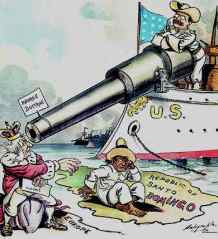 In the late 19th Century, a phenomenon known as ‘yellow journalism’ took hold as newspapers battled for marketshare. More specifically, it was the battle between Joseph Pulitzer and William Randolph Hearst which fostered the coining of the phrase. At a high level, Yellow Journalism is defined as: “…a type of journalism that presents little or no legitimate well-researched news and instead uses eye-catching headlines to sell more newspapers.[1] Techniques may include exaggerations of news events, scandal-mongering, or sensationalism.” In fact, Yellow journalism was blamed for the start of the Spanish American War. In response, responsible journalists founded organizations such as the Society of Professional Journalists (founded 1909) and developed codes of ethics and responsible reporting. Today, responsible, professional journalists adhere to a code of ethics or canons which dictate that they will report the truth accurately. As stated in the SPJ: “Seek Truth and Report It”. While some bend the rules, most reporters are accurate and professional.
With the rise of “bloggers”(this author included) and other social media ‘experts’ could it be that we are seeing the rise of a new wave of ‘Yellow Journalism’? (more…)
EXTRA! EXTRA! “Bin Laden Documents Published and Available Online” May 3, 2012
Posted by Chris Mark in Industry News, terrorism.Tags: abbottabad, al qaeda, bin laden, Chris Mark, Combating Terrorism Center, mark consulting group, SEALS, terrorism, West Point
add a comment
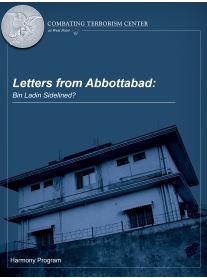 The Combating Terrorism Center at West Point has published a number of declassified documents taken from the raid that killed Osama Bin Laden. You can access the documents here.
CNN terrorism analyst Peter Bergen had access to some of the materials while researching his new book, “Manhunt: The Ten Year Search for Bin Laden from 9/11 to Abbottabad.”
“The documents paint a portrait of a man who was simultaneously an inveterate micromanager, but was also someone almost delusional in his belief that his organization could still force a change in American foreign policies in the Muslim world if only he could get another big attack” in the United States, Bergen said on CNN.com this week.
Porn, Steganography & Al Qaeda = Bad News May 2, 2012
Posted by Chris Mark in InfoSec & Privacy, Risk & Risk Management, terrorism.Tags: al qaeda, Chris Mark, cybersecurity, data security, InfoSec, mark consulting group, steganography, terrorism
add a comment
 “Believe half of what you see and nothing that you hear”…Benjamin Franklin
Recently it was disclosed that German cryptographers had managed to decipher plans taken from an Al Qaeda operator who had a memory card confiscated. According to the story: “On May 16 last year, a 22-year-old Austrian named Maqsood Lodin was being questioned by police in Berlin. He had recently returned from Pakistan via Budapest, Hungary, and then traveled overland to Germany. His interrogators were surprised to find that hidden in his underpants were a digital storage device and memory cards. Buried inside them was a pornographic video called “Kick Ass” — and a file marked “Sexy Tanja.” “ As stated on Gary Kessler’s website: (more…)
Random Thoughts On Piracy Summit (I have to talk about guns a little ;) May 1, 2012
Posted by Chris Mark in Industry News, Piracy & Maritime Security, Risk & Risk Management.Tags: Anti Piracy, armed security, Chris Mark, combating piracy week, Maritime Security, markconsultinggroup.com, Scout Sniper, security, weapons
add a comment
 In reflecting upon the Piracy Europe even in Hamburg that I attended last week, I was struck by a few things that were said and proposed. The speakers were generally very good although the material is getting a bit old at this point. With piracy at near 2007 levels, security vendors are scrambling to convince shipping companies that they are still needed. Selling on Fear, Uncertainty, and Doubt (FUD) seems to be the new way of business development.
With regard to the security vendors, there appeared to be two distinct perspectives on how to stop pirates. Neither seemed appropriate. One company had a rep get up and show a picture of himself with a Barrett .50 cal SASR (special application scoped rifle) (shown in the pic above with the very skilled, handsome and smart USMC Sniper..yeah its me). The intimation was that if you have larger guns, you have more ‘firepower’ and thus better security. This is a very simplistic way of thinking about security and demonstrates one of the challenges of maritime security. Security is not about technology…it is about people, strategies, and tactics. Tools (such as weapons) are useful but only if employed correctly. You can read the whitepaper “weapons and tactics in the prevention of piracy” here. This “goons with guns” approach was not well received and quite frankly, I felt it perpetuated what the attendees think of American security…knuckle-dragging, goons with guns. Blackwater is alive and well in the minds of most of those who attended the event. (more…)

 Global Security, Privacy, & Risk Management